

Every year, the Canadian Wood Council recognizes excellence in wood design and construction with the presentation of the Wood Design and Building Awards. This year, four projects involving ASPECT were recognized, including: Adams Lake Health & Wellness Centre, Kin Park Pavilion and Ice Rink, Google Borregas, and 1120 Ossington. Congratulations to the architects and the entirety of the project team!
Read more about the projects below.

Adams Lake Health & Wellness Centre
Located on the Sexqeltqin No. 4 Indian Reserve near Adams Lake, this new Health and Wellness Centre supports the community’s growing needs with spaces for health services, education, and cultural programming. ASPECT provided Engineer of Record services for the 14,000-square-foot, timber-framed facility, designed with a holistic approach to wellness and a focus on renewable materials and energy efficiency.
Check out the full project page of Adams Lake Health & Wellness Centre


Kin Park Pavilion
Located in Fort St. John, the new Kin Park Pavilion enhances the community’s skating facilities with warming areas, washrooms, concessions, and storage for rink operations. The pavilion sits alongside a new oval multi-use rink and boarded concrete rink, creating a welcoming year-round hub for recreation and connection.
See more photos of Kin Park Pavilion


Google Borregas
This five-storey multi-award winning office marks Google’s first mass timber development, setting new benchmarks in sustainable design, construction, and carbon reduction. ASPECT provided Temporary Works Engineering to support Kinsol in safely and efficiently constructing the exposed timber structure, which has since achieved LEED® Platinum certification.
Read more about our work on Google Borregas


1120 Ossington
This five-storey multi-award winning office marks Google’s first mass timber development, setting new benchmarks in sustainable design, construction, and carbon reduction. ASPECT provided Temporary Works Engineering to support Kinsol in safely and efficiently constructing the exposed timber structure, which has since achieved LEED® Platinum certification.
Read more about our work on Google Borregas


ASPECT will be at Woodrise from September 22-25 and we’re hosting a series of events to complement the week-long congress at the Vancouver Convention Centre! Here’s a quick look at what we have planned:
TUESDAY

ASPECT x MTC Solutions’ Strides by the Seawall
⏰ September 23 @ 6 AM 📍 Vancouver Convention Centre
(Wood)Rise and shine for a run by the Seawall! We’re partnering with MTC Solutions to host an early morning run that will get your heart racing before a day full of networking and learning. Running for the fun of it? Join us for a 7K run. Feeling more ambitious? We’re also doing a 13K run! For both runs, meet us at the Vancouver Convention Centre at 6 AM so we can be back in time for the Woodrise breakfast.
WEDNESDAY

ASPECT Open House
⏰ September 24 @ 4PM 📍 190 West 3rd Ave
Did someone say “margaritas”? September 24th from 4-7 PM, join us at our Olympic Village office for a casual pre-dinner social right before the Woodrise Timber & Taps dinner, just down the street. Our doors at 190 West 3rd Ave will be open for you to join our team for margaritas, snacks, and chats!
THURSDAY

Woodrise Tours of Malahat Skywalk & Visitor Centre and Terminus at District 65
⏰ September 25 @ 8 AM 📍 Vancouver Island
While we can’t take credit for organizing these tours (they’re part of the official Woodrise programming), we can proudly say we’re guiding tours at two of the stops! The Post Congress Tour # 8 Wood, Innovation, and Community: A Tour of Vancouver Island’s Pioneering Structures and Spaces will include stops at our Malahat Skywalk and Terminus District 65 projects. Get the inside scoop from CEO, Principal Adam Gerber (Malahat) and Founding Principal Andrew Chad (Terminus) on how these projects came to be.
Register for the tour HERE.
More on Woodrise 2025
Woodrise in an international congress that promotes innovative, sustainable, and resilient building practices for timber construction. The congress serves as a hub for knowledge sharing amongst engineers (like us), architects, developers, researchers, policy-makers, and government officials.
Each year, the location of Woodrise changes and this year, it is in Vancouver! ASPECT’s head office is also located in Vancouver, so we thought, why not create MORE opportunities for knowledge sharing and networking?
If you have questions about any of the events ASPECT is hosting, please contact:
Chantal Reitmaier
Senior Marketing & Communications Specialist
chantal@aspectengineers.com
You can also learn more about Woodrise 2025 on the Woodrise website.

Mass Timber Construction in Ontario is Growing.
The new Ontario Building Code is released, effective January 1, 2025, and the three-month grace period is behind us.
These changes were long anticipated, with the Ontario Government first announcing their intentions last April (2024). Among the latest changes is an increase in the permissible height of encapsulated mass timber construction (EMTC) from 12-storeys to up to 18-storeys for certain occupancies. A significant driver behind this change is the province-wide need for affordable housing, as well as to support local forestry and manufacturing industries.
The benefits of mass timber are clear – quieter and faster construction, with less embodied carbon than traditional building materials – but the lack of familiarity around this material has limited its adoption in modern construction. Historically, “Heavy Timber Construction” has been widely accepted in the codes but its application has been limited to shorter buildings requiring lower fire resistance ratings. Over the past two decades, there has been extensive testing of mass timber structures, both with and without encapsulation assemblies, to determine acceptable safety thresholds that would allow for its use more broadly. That testing led to an update to the National Building Code for 2020, and the changes were subsequently adopted by British Columbia (2024) and now Ontario (2025).
The new Ontario Building Code aligns the province with the changes to the National Building Code and similar amendments in other provinces and US States. It acknowledges and welcomes the possibilities that EMTC can offer local markets − an increase in safe, sustainable, and scalable mass timber adoption in our built environment.
What has changed exactly?
The changes to EMTC are classified by major occupancy groups (see Figure 1 below). Both multi-unit residential developments (Occupancy Group C, including apartments and hotels), offices and banks (Occupancy Group D) are now permitted up to 18-storeys under the new building code. Additionally, Occupancy Group A-2 (including schools, libraries, and restaurants), a type that was not previously specified in the code for EMTC, is now permitted up to 18-storeys. This typology is one of many new occupancy groups now permissible for EMTC under the new code, including assisted living care facilities (B-3), retail / markets (E), factories, workshops, and labs (F-2), and warehouses / parkades.
While the ability to build to 18-storeys is the prevailing headline since these code changes were announced, there is an argument to be made that the expansion of other typologies that can apply EMTC in Ontario is just as exciting. Another significant change: the new allowance for exposed timber up to eight and nine storeys for Group C and Group D buildings, respectively, and height increases for other occupancies as well.
It’s a lot of change at once – with a lot of potential applications.
 Figure 1: Minimum encapsulation requirements of Encapsulated Mass Timber Buildings
The current state of Mass Timber in Ontario.
While this change has only taken effect this year, the market has long anticipated that this change was coming, with several multi-unit residential developments beyond 12-storeys planned around Toronto in particular. Depending on the development, the ability to transition a planned development from 12-storeys to 18-storeys would mean meeting a new minimum encapsulation requirement of 70 minutes. And though the methods of achieving a safe, compliant, and performative mass timber may be different, the structural considerations for a taller building remain similar regardless of the materiality.
So, now that it’s permitted in the code, and if the design expectations are not significantly more than a taller building of a different material type (and the benefits of mass timber are clear), will we see a rush of mass timber buildings in Ontario?
With focussed effort to overcome a few pre-existing challenges, it certainly should.
The reticence surrounding mass timber, particularly in Ontario, and particularly for multi-unit residential buildings, has less to do with what the code allows, and more to do with the implied, associated risks. The knowledge surrounding mass timber in the industry as a whole is simply not as deep as other material types, and there are often concerns around both cost competitiveness and available, constructable solutions. Assumptions about floor-to-floor heights and grids need to be revisited rather than taken for granted from other structural systems. Pricing needs to be conducted holistically to account for reductions in other categories such as finishes, foundations, schedule and other general conditions of construction.
Yet, there are many mass timber developments that are moving forward – across the GTA as well as the province as a whole – projects that ASPECT has first-hand experience with.
How are these mass timber projects becoming a reality? Truth time: mass timber can be price competitive AND constructable. You just need to go about it the right way… with the right team members at the table.
The opportunity.
Despite the misconceptions, this is an exciting time for mass timber in Ontario. The multi-unit residential market, particularly in Toronto, is opening up to other delivery methods, compared to what we’ve seen in recent memory. The local demand for the larger / taller towers (beyond the long-planned, star-chitect associated developments that are already well underway) has diminished. In the midst of this, there are new possibilities to make better use of interesting sites across the city – spaces for infill developments, and for “upzoning”, that allows for a “middle-tier” of housing and “middle-tier” of heights – heights that now also permit the use of EMTC. These sites are located in established communities, on major streets, with existing infrastructure and amenities in desirable neighbourhoods. In turn, this reality is opening up the possibility for a mix of buildings (and building types) that hold the potential to embroider the fabric of the city.
Beyond multi-unit residential developments, the expansion of EMTC possibilities to additional occupancy types holds the potential to incorporate new and exciting design solutions in Ontario that were not previously explored. Daycares, long-term care facilities, schools – these building types all stand to substantially benefit from the material quality associations, physiological and psychological benefits, and biophilic connections offered by mass timber.
And we all stand to benefit from buildings that incorporate materials with lower embodied carbon.
The possibilities are growing.
A new year always signals a call for positivity, resetting us on a course for change that we always wished for ourselves and others. And while our own, personal resolutions may not have made it past January (we always try so hard, though…), the new changes to the Ontario Building Code stand to create a lasting impact on our buildings and our communities. The code allows for it… what will we all choose to do next?
ASPECT has been involved in the design and construction process of mass timber and tall timber projects across Canada – including the first EMTC building constructed in BC. We’re here to help walk you through these new changes as you make decisions for your project, and to apply our multi-faceted understanding of mass timber to help normalize its use in new ways that are equally exciting and pragmatic.


Reframing Waste: Reflections from the Canadian Circular Economy Summit
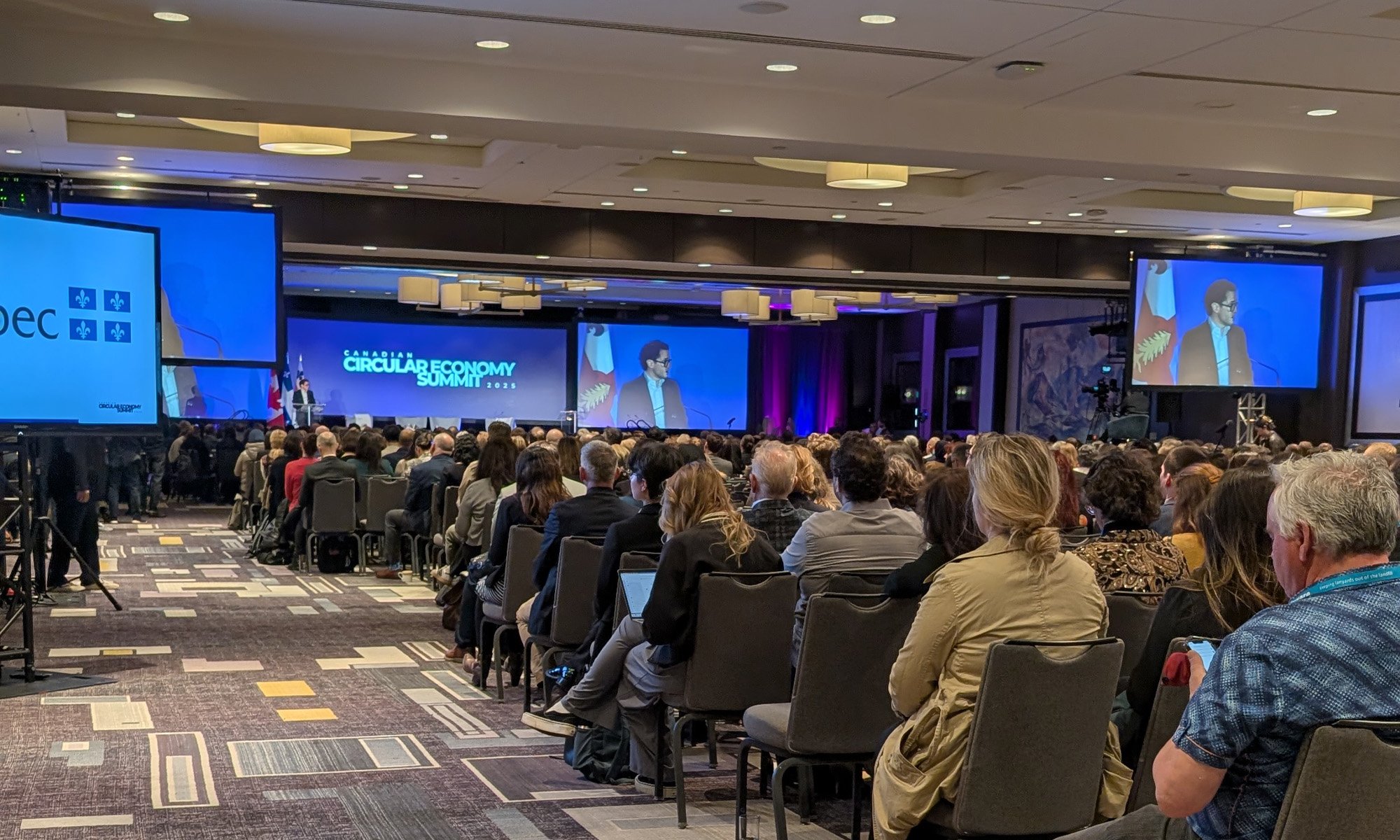
Earlier this month, ASPECT’s Sustainability Lead, Caroline Butchart, attended the Canadian Circular Economy Summit in Montreal—a gathering that brought together innovators, designers, policymakers, and advocates from across industries to reimagine how we use, reuse, and repurpose materials. With a deep passion for circularity and the reuse of existing buildings, Caroline came away from the event feeling energized and inspired. In this blog, she shares her reflections on what made the Summit so refreshing, the insights that stuck with her, and why cross-industry collaboration might just be the key to unlocking a more sustainable built environment…
“If you’ve attended any presentations on implementing building or material reuse strategies, you’ll know there is an exhaustive list of hurdles to overcome, including challenges around deconstruction costs, material sorting, material approvals, and the logistics of supply and demand. The Circular Summit, by contrast, was a surprisingly optimistic and collaborative event, and I came away feeling re-energised and enthusiastic about the challenges rather than hopeless.
For me the real novelty of this Summit was the cross-industry audience. I loved hearing ideas and success stories from different industries, and interestingly the marketing messages that people are adopting to sell circular solutions. Maybe there is demand for reclaimed materials, but if we’re only marketing the materials as scrap/salvage, we’re really doing them a disservice.
- Only 22% of people are motivated by eco-friendly ideals when making decisions. So how do we meaningfully reach the other 78%? (Thanks to OneEarthLiving for the eye-opening workshop!)
- The idea of reframing deconstruction as “urban mining” is powerful. It shifts the mindset that resource harvesting creates so instead of a having a problem to dispose of, we have beautiful, rare materials that are being responsibly harvested.
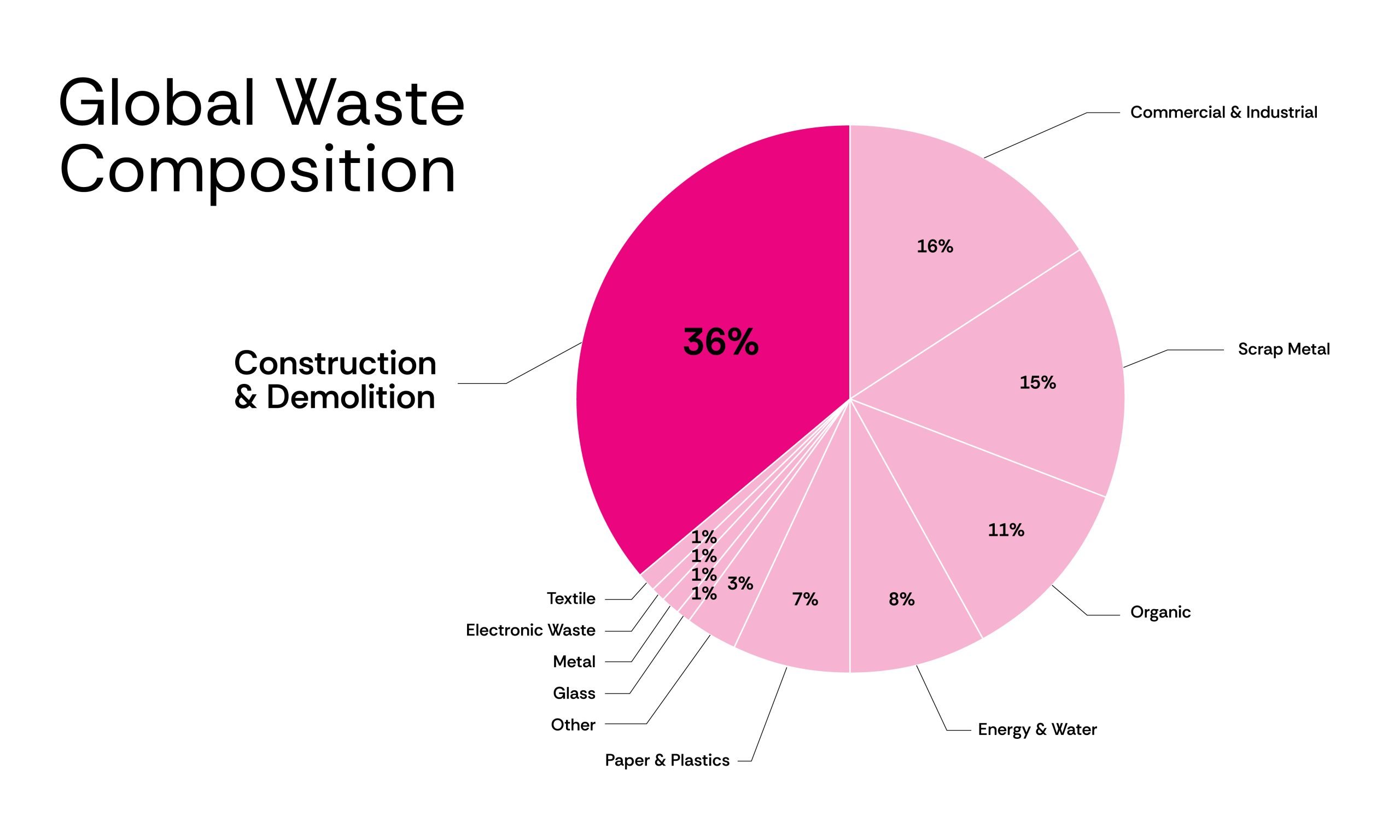
- The construction industry is responsible for 36% of all waste globally, and roughly 12% of global emissions are generated by the construction of buildings. Adopting circular strategies doesn’t choose one sustainability initiative over another; it is a solution to both crises simultaneously
- Circular loops don’t need to be large. The most compelling success stories came from targeting a single material or component, rather than trying to rehome entire assemblies or buildings. Let’s create circular specialists, not circular generalists.
- Nature-based solutions are everywhere. This was a bit of a tangent for me as a structural engineer, but it also provided an interesting message: identify your waste stream—whatever you have an abundance of—and find a creative, use for it that doesn’t involve landfill or waste-to-energy. Aruna Revolution was my favourite here.
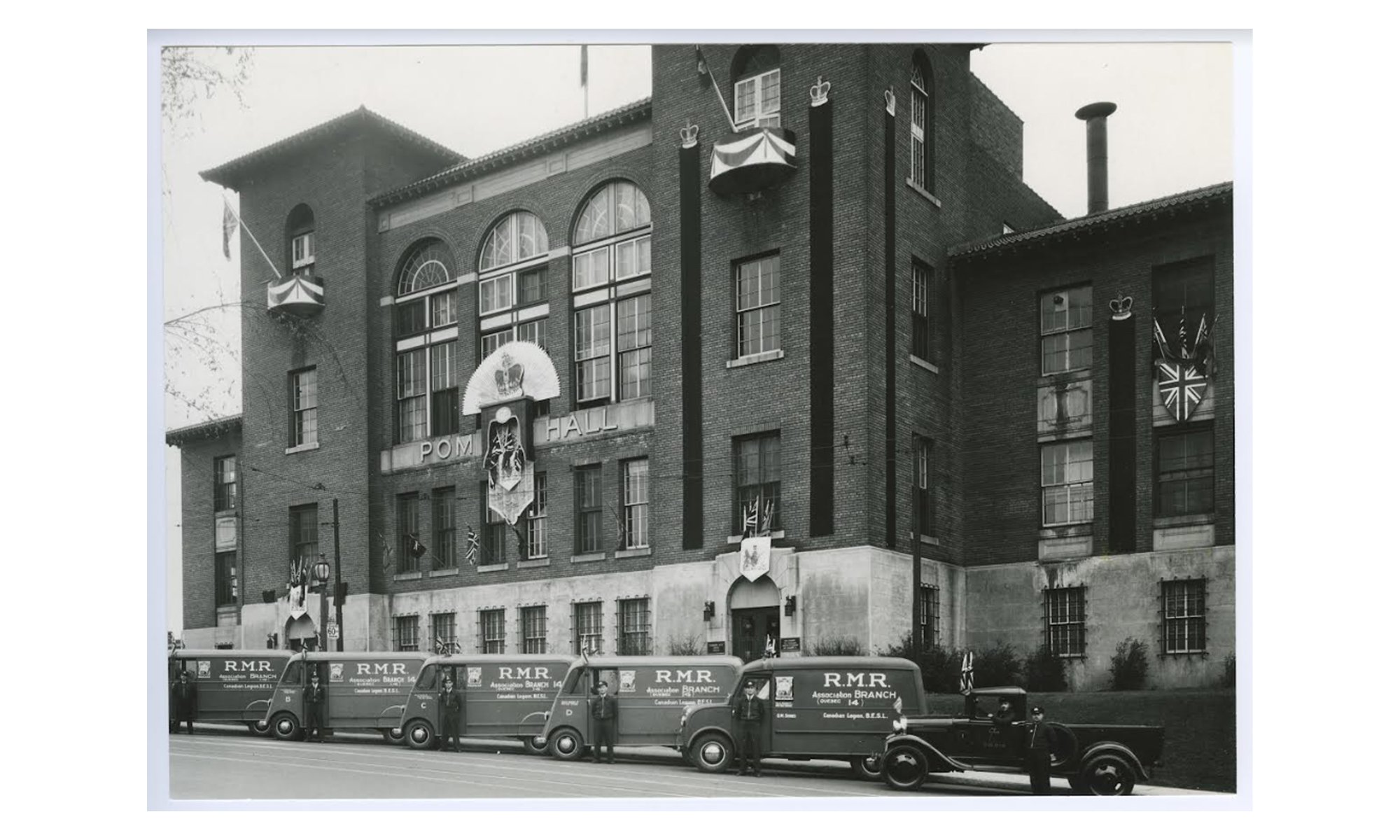

This was also my first visit to Montreal, and by total coincidence, I found myself staying in the former POM Bakery in Westmount. This 1930s structure once housed Canada’s first mechanised bakery, and in 1986 was renovated into a condo building. To solve the problem of large-footprint buildings receiving little natural light at their center, the designers created vast, luxurious lobbies and incredibly spacious apartments laid out with “service functions” on the interior and bedrooms and living rooms along the perimeter. The size difference between these units and those being built today in Vancouver was a little bit staggering.I came across one realtor listing for a unit in the building that begins with: “Imagine living in this piece of history.” And honestly—yes, please. Comfortable, spacious apartments in buildings that already exist? This is in significant contrast to the message we often hear – that building occupancy conversions are too hard, or create apartments that are unlivable. And, in a world where materials are being tariffed and landfills are reaching capacity, we should be doing way more of this.
To me, circular solutions are the epitome of Earth Month. They represent a choice to regenerate, minimize environmental harm, and maximize the value of our extracted resources. From a structural engineer’s perspective, building upgrade and reuse projects are also some of the most fascinating projects to work on. They demand detective work to understand how the existing building is put together, inventive thinking to solve tricky constraints, and close collaboration across the entire design and construction team.
So, here’s to the Earth, and to everyone finding ways to not only minimise harm to the environment, but also finding ways to regenerate and restore the environment we live in."
Caroline Butchart is a Senior Structural Designer and ASPECT’s Sustainability Lead. She holds a Master’s degree in Architecture and Structural Engineering from the University of Leeds, where she focused on design team integration and sustainability. In addition to her project leadership, Caroline champions internal sustainability initiatives for all ASPECT team members around the world, contributing to our standards of practice, questioning our approaches, and mentoring our growing staff. Her work extends into the not-for-profit sector, where she has developed tools and resources to help drive meaningful reductions in embodied carbon across the industry.

ASPECT Structural Engineers named one of Canada’s Top Small & Medium Employers
For the second consecutive year in a row, the global structural engineering firm is selected to be on a competitive list as part of the “Top 100 Employers” Project.
This morning, ASPECT Structural Engineers was included on the 2025 list of “Canada’s Top Small & Medium Employers”, which was announced in a magazine published by MediaCorp Inc. The announcement has since made way to other prestigious publications including the Globe and Mail.
Now in its 12th year, Canada’s Top Small & Medium Employers is an editorial competition that recognizes the small and medium enterprises (SMEs) that offer the nation’s best workplaces and forward-thinking human resources policies. Applicant employers are evaluated across eight categories of criteria:
- Workplace
- Work Atmosphere & Social
- Health, Financial & Family Benefits
- Vacation & Time Off
- Employee Communications
- Performance Management
- Training & Skills Development
- Community Involvement
The competition is open to any Canadian company that has less than 500 employees worldwide, and is a commercial, for-profit business. Richard Yerema, Executive Editor of the Canada’s Top 100 Employers project comments, “Our SME winners have always provided dynamic environments where employees are in the driver’s seat in mapping out their career paths, but what’s changing is their ability to match larger employers in terms of benefits such as vacation allowance, mental health support, and family-friendly benefits. The differences between these SMEs and the winners on our national list are becoming increasingly smaller.”
As ASPECT continues to grow, one of the company’s priorities remains staying true to the small workplace atmosphere on which the firm was built. The consecutive recognition is a testament to the strength of the firm’s culture and the team’s dedication. “This award reflects the culture the team has built together” says Sarah Rejbakoz, ASPECT’s Director of Human Resources, “Where people feel supported, challenged, and empowered to grow. From our flexible work options to our inclusive leave policies, we’re passionate about creating an environment where our team can thrive.”
The jury identified a number of reasons for ASPECT’s selection including:
- ASPECT Structural Engineers experienced significant growth over the past year, increasing its full-time workforce by roughly 25 per cent — the organization offers referral bonuses to incentivize employees to recruit from their network, ranging from $1,000 to $3,500 for successful hires.
- ASPECT Structural Engineers maintains a formal hybrid work policy that enables employees to work from home for up to two days per week, as well as the option to work from anywhere for up to two weeks per year.
- ASPECT Structural Engineers takes a thoughtful approach when employees need to care for their loved ones, offering a compassionate leave top-up of up to 80 per cent of salary for 15 weeks for a variety of protected leaves including parental, family caregiver and compassionate caregiver leaves.

Additional highlights can be found on the Canada’s Top 100 website.
The complete list of this year’s winners is noted in the official Canada’s Top Small & Medium Employers Magazine.
If you have any questions about this or other ASPECT awards, please contact:
Chantal Reitmaier
Senior Marketing & Communications Specialist
chantal@aspectengineers.com
About ASPECT Structural Engineers
ASPECT Structural Engineers is a globally acclaimed, full-service structural engineering firm. Founded in 2016, we are now a cohesive team of more than 60 engineers, fabrication designers, technicians, and support staff. Through thoughtful yet pragmatic design practices and rigorous training, the engineers and designers at ASPECT understand not only their role in contributing to a project, but also how to support the roles of others.
Many members of the ASPECT team started their careers in other disciplines, pulling from their experience working with carpenters, contractors, suppliers, or architects to contribute to a wider understanding of the value that structural engineers can bring to a project. Our team-based approach focuses on better design, improved constructability, and unwavering accountability.
From the beginning, ASPECT has been driven by the importance of true sustainability, underscoring our commitment to understanding, and educating others on the benefits of, mass timber. Beyond producing award-winning structural engineering work for everything from office buildings, to bridges, to custom homes, we also dedicate a substantial amount of time to working with other industry leaders – industry suppliers, architects, and clients – to work through new ways to design and build for the future. Our diverse team is active in markets around the world, with dedicated offices in Canada (Vancouver and Toronto), and Switzerland (Bern).

Building Embodied Carbon Requirements into the Local By-Laws
Changes are coming to the Vancouver Building By-law...are you ready?
The local design and construction industry has long-anticipated updates to the local building code from the City of Vancouver – specifically, the way that embodied carbon requirements are addressed. While certainly expected, there is apparent industry apprehension associated with these changes – and with carbon reductions in general – that has only grown over the past few years.
In 2017, the City of Vancouver measured the embodied carbon of a wide cross-section of buildings, ultimately finding the average embodied carbon of these buildings to be 400kgCO2e/m2. Since 2023, the limit on embodied carbon has been set at 800kgCO2e/m2 (which is huge!), and in 2025 (next year!) that limit will become 360kgCO2e/m2.
Broadly speaking, the growing industry apprehension that we are referring to stems from what these new embodied carbon limits could mean for building design, the approval process, and the overall cost of a development. As structural engineers who are passionate about truly sustainable design and construction, we’re excited to see local regulations and embodied carbon policies expanding so quickly. So, while the code changes may still be months away, getting to the heart of the matter sooner rather than later is important to ASPECT…and the industry at large.
The heart of the matter.
Structures are responsible for about 55% of the total embodied carbon of a building1. More than any other discipline, structural engineers have the ability to improve the efficiency of their designs without impacting building performance. This means we have a significant opportunity to make an impact on the environment.
When it comes to addressing Climate Change head on, there is a hierarchy that can be applied to determine the most effective ways to reduce embodied carbon (see Figure 1.1 below). Still, any time a code or building regulation changes, it can be challenging for building owners, not to mention the architectural community, to stay on top of the far-reaching implications of what the latest changes could mean for their work. Are there new materials on the market to consider in order to adapt to these changes? How and when should a Life Cycle Assessment (LCA) be completed? What could these materials mean for the overall design and construction process? These questions (and many more) have been circulating for quite some time.
In early May, ASPECT Sustainability Lead Caroline Butchart took part in a workshop that was jointly held by the Carbon Leadership Forum and the City of Vancouver. At this Workshop, the City introduced some of the proposed changes to participants, outlining the possible requirements and formally requesting industry feedback. The feedback that the City has received over the past few months has been folded into the upcoming 2025 regulation changes, which are currently open for public comment and were also shared in a webinar with industry professionals last week. Through Caroline’s lens, we’ve compiled a bit of a “roundup” of the information presented so far – taking a closer look at what the upcoming code changes are likely to involve, as well as some guidance on steps that you can take now to be as prepared as possible when these changes come into effect.
Figure 1.1: Climate Change "Levels of Intervention"

Current State: Embodied Carbon Requirements in the Vancouver Building Code Today
Whole building Life Cycle Assessments (LCA) have been required by the City of Vancouver as part of rezoning applications since 2017. In 2023, a specific requirement to report embodied carbon was introduced to the Vancouver Building By-Law, requiring design teams to submit an embodied carbon report with their building permit submissions. With this change, the City of Vancouver became the first jurisdiction in North America to write whole life embodied carbon into their building code.
While making this a requirement was a significant step forward, the limit set for this requirement was initially set as a fairly “easy-to-meet” target, with the intention of allowing the industry time to learn and adapt to the new requirements. Through this 2023 requirement, the limit on embodied carbon was set (and remains) at 800 kgCO2e/m2 – a limit that is quite easy for buildings to obtain with minimal changes to standard processes. This limit is based on data collected from rezoning submissions, which indicate that 400kgCO2e/m2 is “typical” for large (Part 3) buildings in Vancouver. By and large, this change was viewed as a way to acclimate the industry to the practice of reporting data, setting the stage for a more meaningful embodied carbon requirement in the near future. A small (but important) step forward.
Building Anticipation: The new Vancouver requirements.
Updates to the preliminary version of the new Bylaw are expected in March 2025 (official announcement still pending), when new (and more difficult to achieve) reduction targets will come into effect for the City of Vancouver. While still in the approval stage, it is anticipated that this target will include a ten per cent (10%) reduction from the baseline value of 400kgCO2e/m2. As was the case when the 2023 target was introduced, projects that exceed the embodied carbon limit can still meet the requirements by demonstrating a 10% reduction relative to a project-specific baseline.
These targets are not arbitrary, and stem from a detailed review of existing building stock that the City of Vancouver has conducted over the past decade. The City has also consulted published studies2 on the subject, each of which points to 400kgCO2e/m2 as a strong baseline.
The new targets will extend to any developments applying for building permit after March 2025.
Future State: What these changes could mean for your project.
As with any new requirement, questions arise as to whether the expectations are, in fact, reasonable. Over the past few months, and at the two webinar sessions recently held by the City of Vancouver, there have been concerns expressed connected to whether project teams will be able to meet these new requirements. And, if they can meet them, what sort of cost implication is associated? This latter concern stems from the belief / underlying assumption that less carbon will always amount to more cost on a project.
The overall theme of project-based presentations at both the CAGBC Building Lasting Change 2024 Conference and the City of Vancouver hosted webinars, is that a ten per cent (10%) reduction in embodied carbon is easy to achieve at no additional cost to the project. It’s important to remember that there is more than one way to reduce carbon. The most appropriate solution for a given project isn’t necessarily the answer for the next project, and there is more than one way to make an impact. At the end of the day, the most effective approach for minimizing carbon is to look for ways that the materials themselves can be minimized. Less building materials...less embodied carbon.
No time like the present: Work smarter, not more expensively.
When it comes to embodied carbon, ASPECT’s position is that, regardless of the local regulations, we should always design with a view to reduce carbon as much as possible. There are plenty of ways to reduce carbon without driving up costs, and early communication between consultants is the key to success here. The most important thing to keep in mind is that minimizing materials equates to minimizing carbon, and also generates a reduction in cost.
One approach that project teams typically take to minimize carbon is taking a closer look at materiality. Specifying low carbon alternatives, such as low carbon concrete, seems, at face value, to be the easiest solution, given the familiarity (particularly in Canada) with concrete structures. However, these material alternatives often come with a “green premium” price tag, and it’s this price tag that tends to generate the concern that embodied carbon targets will add to project expense.
Mass timber, lightwood frame, and hybrid structures that include mass timber often have lower embodied carbon than those built from steel or concrete. Working with a structural engineer who truly understands the entire supply chain connected to wood and mass timber can keep the building costs reasonable.
Figure 1.2: Materiality Considerations

Beyond the materials used, there are ways of approaching the structural design that will also lead to carbon reductions. Optimizing the structural grid in a building for the minimum amount of carbon, for example, is an excellent opportunity to reduce emissions. Talking to your structural engineer about early stage grid studies will place carbon front and centre as a metric for success on any project. You can also work with your structural engineer to optimize the building massing overall for carbon reductions.
Similarly, eliminating transfer structures can be one of the most effective ways to make a building more efficient. Transfer slabs are a huge source of carbon emissions, ultimately introducing broader building inefficiencies as well (and requiring extensive coordination in their own right). The ASPECT team has a bias toward this approach because, logically, reducing material quantities – regardless of what that material actually is – will save costs on the project, and eliminating complex, unnecessary geometry, will save time on the construction site.
Translation: carbon savings do not have to equate to an additional cost for a project. In fact, prioritizing carbon reductions could result in a source of cost reductions.
Think global, act local.
ASPECT is a global company, and Climate Change is a global problem, so naturally we have our eye on regulation changes beyond the province of BC.
In Canada, the National Code is expected to receive updates in 2030 to include mandatory embodied carbon requirements for all of Canada. In the meantime, local municipalities are taking action. Currently, the City of Toronto has an embodied carbon requirement in place in the Toronto Green Standard. Though it is only mandatory for City-owned buildings, any buildings that wish to voluntarily target Tier 2 or 3 of the TGS will need to meet the embodied carbon targets. Further regulation changes are also anticipated for the City of Toronto, particularly surrounding building height regulations for low carbon materials such as mass timber. There is no uniform requirement across the United States, but regulations are regularly evolving at the State level.
Beyond what is regulated, our industry has a responsibility to design and build with intention, particularly given the state of our planet. There are many industry team members who have made the commitment to more significant carbon emissions, even without regulations. Questioning true needs, traditional approaches, and foregone conclusions on every project can lead to critical carbon efficiencies. Regardless of when the new regulations take effect and where, why not apply this way of thinking as soon as possible?
_______________________________________________________________________________________________________
Interested in talking through what local changes could mean for your project?
Reach out to our Sustainability Lead, Caroline Butchart, to chat further!
Footnotes
- Building, "Sustainability: Net zero carbon" (June 12, 2020): https://www.building.co.uk/data/sustainability-net-zero-carbon/5106428.article
- "Policy Research on Reducing the Embodied Emissions of New Buildings in Vancouver." Prepared by Zero Solutions, Authored by Zahra Teshnizi (April 2019): https://vancouver.ca/files/cov/cov-embodied-carbon-policy-review-report.pdf


In Conversation with ASPECT's new Director of Innovation.
Last fall, Amir Shahrokhi (B.Arch., M.Arch.) joined ASPECT, pioneering a new role – and a new perspective – for our global structural engineering team.
With more than 15 years of experience delivering projects and teaching around the world, Amir has joined ASPECT’s Toronto office as both Associate Principal and Director of Innovation. This Director role is a new position for ASPECT, and one uniquely suited to Amir’s perspective, fulsome architectural experience, and passion for mass timber design.
Amir’s experience prior to joining ASPECT is extensive, including his role as Director of Building Systems at Digifabshop, where he led the firm’s off-site construction efforts, and Project Director for SHoP Architects, where he delivered more than a million square feet of projects and became focused on mass timber design strategies. Amir is known for his innate understanding that inventive, meaningful, and well-executed work requires the input and aspirations of multiple stakeholders, and he is adept at aligning these aspirations amongst project team members to create memorable spaces and experiences that can positively impact public and private life. His experience includes everything from multi-block urban developments and multi-unit housing, to art installations and gallery spaces. In addition to his years of architectural practice, Amir has also taught and lectured at universities across North America, including Yale University, the University of Pennsylvania, The New School, the University of Arkansas, and Auburn University.
As ASPECT’s new Director of Innovation, Amir provides oversight and direction on project delivery and engineering operations, ultimately driving, planning, and implementing innovation across ASPECT.
We sat down with Amir to learn more about why he joined ASPECT, where his passion for mass timber comes from, and where he sees the greatest opportunities for innovation not only within ASPECT, but also across our industry as a whole.
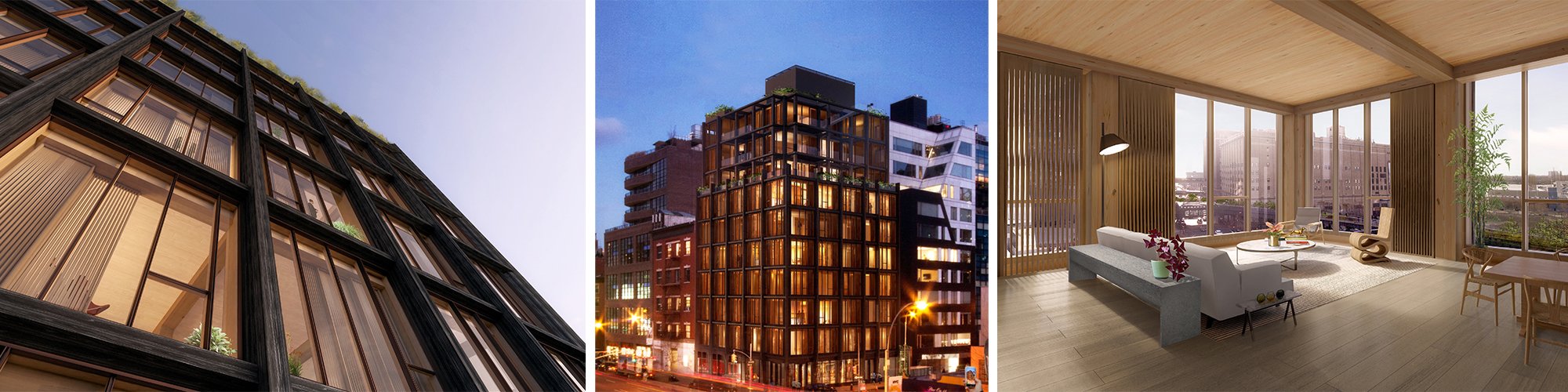
ABOVE: Exterior and Interior views of 475 West 18th development in New York. Renderings Courtesy of SHoP Architects.
Obvious question first: why would an architect want to join a structural engineering firm?
Amir Shahrokhi: The architectural focus is centered around what the appearance of a building – the final built form – is, and how that form is experienced. While I’m passionate about architecture, for me, how the building actually comes together – the process of designing for construction, as well as actually constructing – is equally fascinating and equally important. This fascination with “how things get built” is something I’ve had from an early age – and only exacerbated by my junior high shop class. The “how” is critical, in my opinion.
Even from my undergraduate days, my experience in architecture has led me to work with talented designers and architects who had true design-build practices. Whatever we designed, we were also making ourselves. Anticipating the actions of how a design can actually come to life has become engrained in me, and this is an area where structural engineers have the potential to make an even greater impact. Structural engineers are responsible for the bones of a building – the aspects by which everything else is supported.
Particularly in today’s economic climate, how constructable a design is, and how efficient it is, truly impacts the overall viability. With more industry collaboration, I believe it’s possible to design and realize some truly beautiful…and equally constructable…buildings.
You’ve designed for a lot of different building materials in your career. Do you have a particular affinity for mass timber?
AS: Affinity is a good word for it – or enthusiasm. In the past, when I was working as part of architectural teams designing for projects that involved steel and concrete, I would ultimately spend very little time truly thinking about the structure. At the time, we really didn’t have to think much about the performance of the building or how viable it was, particularly when working with these materials. We knew that the design was going to work – a conclusion that would often be taken for granted.
Delving deep into mass timber really renewed my passion for constructability, and for the compatibility, viability, and efficiency of a structure. My experience with the material started about a decade ago, and was leading the design of a project called 475 West 18th – a project that actually started as a USDA/SLB competition before evolving into a project. This project gave me the opportunity to really engross myself with mass timber, as well as to travel to Europe and see how the products were made, and how those products were implemented in that market. The whole experience broadened my perspective – and also resulted in the project receiving a US Tall Wood Building Award.
On the whole, designing for mass timber forced me to think much more systematically about the structure as an integrative and expressive part of the architecture. For me, working that closely with the structural team was empowering. I could see that, at a structural firm, you could still influence constructability from the front-end of the process. Working on mass timber projects forces you to work more closely with all building disciplines, and to embrace more proactive architectural design practices…a beneficial approach, regardless of the materiality.
Of all the structural engineering firms in the world to join, why choose ASPECT?
AS: While working on this seminal 475 West 18th project, I was introduced to ASPECT Founding Principal Bernhard Gafner at Holzbau conference, then in Garmisch-Partenkirchen. A few years later, I reached out to ASPECT after SHoP Architects was awarded the Ribbon Building in the Distillery District in Toronto. Through Bernhard and Adam Gerber, ASPECT’s breadth of knowledge was immediately clear – both the firm’s experience as structural engineers and mass timber design specialists, and Bernhard and Adam’s personal experience as former carpenters.
It was also immediately clear that I had found a kindred connection for my passion for construction and building things. There was just an ease – a shorthand – that represented how clearly ASPECT thought about how things came together. Even in my architectural role, I didn’t have to explain what I saw – they saw it too. There was a true camaraderie of working with team members who have the experience and the shared knowledge that just makes everything easier.
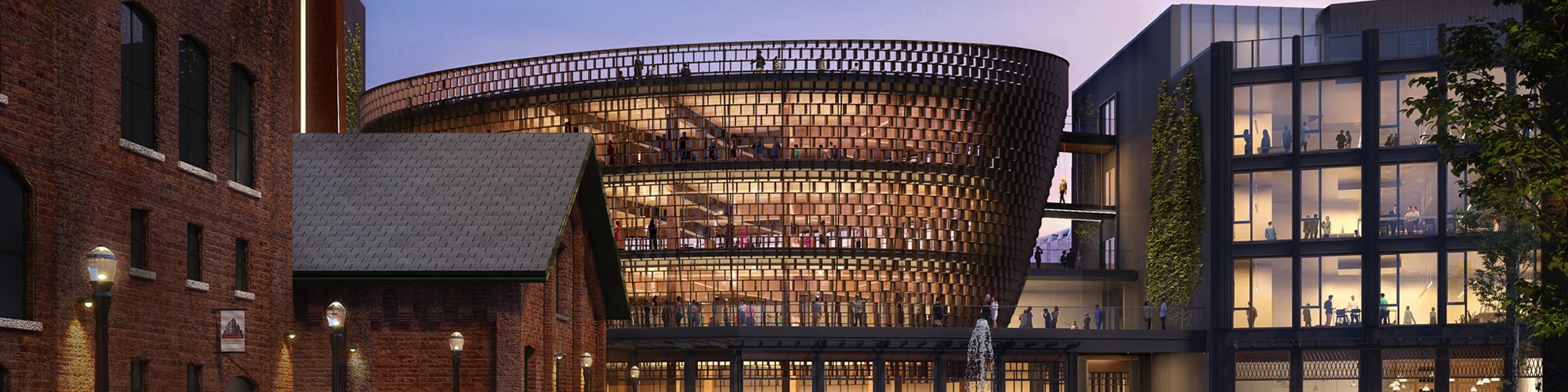
ABOVE: Exterior view of Ribbon Building in Toronto, Ontario. Rendering Courtesy of SHoP Architects.
From your “outside perspective”, what are the (potentially unrealized) opportunities for innovation within engineering operations?
AS: The biggest opportunity for innovation might seem retroactive, but I feel strongly it’s the most important focus right now: being able to anticipate what it means to construct something. Particularly as we’ve moved into more digital design practices, there is this gulf between what an engineer or a designer sees on screen, and what it means to truly build that thing in the field. There are, increasingly, opportunities for automation that expedite the tedious detail of the work, and would allow engineers and designers to take a step back and really consider…together…the design intent.
Efficiency-forward practices allow that space to take a step back. This space is just so critical, and particularly so for engineers, given the realities of the business. An architecture firm, frankly, has fewer projects to service at once, allowing for more attention for each project. The reality of engineering is often that you just have more on the go – more to balance and more to juggle.
Personally, I feel that pairing architects more closely with structural engineers – to provide more of a “bridging” role – is something we will see more and more of. Architects have the experience of coordinating the entirely of a project…of seeing all aspects. Sharing this insight more readily can help connect the “why” for structural engineers, and open up their own in a way that expands rather than limits. Context is key.
Of course, I also find the way that ASPECT has structured our practice particularly innovative, in that we do both “front end” work (through the design phase), and “back end” work (through the production and construction phases), and we use those experiences to inform the other scopes we’re involved with. Doing work for suppliers and research for product development – all of that knowledge is embedded when we’re completing our “up front” design work as well. Innovation through influence is the goal – leveraging our experience and repeat performance to show that there are ways to do things differently.
You’ve worked on projects around the world, and you’re based in Toronto now. What are some of the notable differences in the way developments move forward in Toronto?
AS: I moved back to Toronto in 2017, and it’s interesting to see how much has remained unchanged here. The zoning and the construction methodologies have formed a reinforcing cycle where the point tower typology that dominates here requires flat plate concrete construction. That’s where the skills developed, which then (in turn) reinforces more of that work.
I think it’s important that markets have alternative methods of product delivery, and that there is competition in that regard. If a market becomes highly-reliant on a single method of delivery, cost certainty can become an issue. There are ways of providing density that are not reliant on a single building typology or method of delivery. You can really see the market opening up to this perspective in recent years.
Widening back out to a global lens, what are some innovative ideas that you are most excited about that you see taking hold in the industry in the near future?
AS: Unsurprisingly (given my background), I get excited about all the work that’s being done in the industry connected to product thinking and platform-based approaches. I certainly don’t mean applying such approaches to every single building, but there is a balance that I think these approaches can help with.
Such balance is inherent in the way we already think about the built environment. A great example is the concept of “background buildings” and “foreground buildings”. While a building should always be contextually responsive and culturally appropriate, there is an important distinction between buildings that were designed to form more of the background (“background buildings”) and buildings that were meant to shine (“foreground buildings”). There is a very real need for both in an urban context. As a society, we wouldn’t want “all” foreground buildings, because then our environment would just be yelling at us all the time! Background buildings are equally important, and there is a lot to be said for delivering these buildings through a product-based approach. Streamlining “the background” can provide cost assurances around systems that have been pre-engineered and developed. This can also really help accentuate the “foreground” structures – structures that would (inherently) have a more significant immediate and long-term impact.
I love pointing to this example, because it really underscores the point that automation does not need to be everything – but it can be better utilized to focus our attention on bigger and more challenging ideas.
In my opinion, the greatest potential for innovation in our industry comes from being very selective about what to focus on – something a “designer-builder” mentality greatly underscores. That’s what excites me the most: an anticipatory mindset that finds new ways to create balance and focus.
_______________________________________________________________________________________________________
To speak with Amir about his experience, expertise, and new role at ASPECT, please reach out to him directly through his LinkedIn Page.

ASPECT Structural Engineers selected as one of Canada’s Top Small & Medium Employers
The global structural engineering practice joins a competitive list of top employers in the 2024 “Top 100 Employers” Project.
The 2024 list of “Canada’s Top Small & Medium Employers” was announced this morning in a special magazine published by Mediacorp Canada Inc. The Top Small & Medium Employers category focuses on smaller enterprises with less than 500 employees, and is part of the “Canada’s Top 100 Employers” project. Conducted since 1999, this project includes 19 regional and special-interest editorial competitions that reach Canadians annually through publications such as The Globe and Mail.
Canada’s Top Small & Medium Employers is a competition that is now in its 11th year, and recognizes the small and medium businesses (SMEs) that offer the nation’s best workplaces and more forward-thinking human resources policies. Applicant employers are evaluated across eight categories of criteria:
- Workplace
- Work Atmosphere & Social
- Health, Financial & Family Benefits
- Vacation & Time Off
- Employee Communications
- Performance Management
- Training & Skills Development
- Community Involvement
The announcement noted that, this year, the competition for recognition amongst SMEs was stronger than ever. The competition is open to any company in Canada that has less than 500 employees worldwide, and is a commercial, for-profit business. Kristina Leung, management editor of the Canada’s Top 100 Employers project, noted that, “What’s remarkable about the employers on this year’s list is how quickly and effectively they’ve worked to create rewards and other programs developed from employee input…SMEs have enviable levels of customization, flexibility, and speed-of implementation that are difficult for larger employers to match.”
This is ASPECT’s first year recognized on the list since the firm was first founded in 2016.
“Creating an environment that established new possibilities for what a workplace could be was a big part of why we started ASPECT,” says Gina Sheppard, COO and one of the Founding Principals of ASPECT. “Of course, this recognition means so much to the leaders who started ASPECT – Andrew Chad, Bernhard Gafner, Mehrdad Jahangiri, Adam Gerber and me – but it is actually a direct reflection of the incredible people that make up ASPECT today. There are so many team members who set the “tone” for who we have become as a firm, and who have since stepped up to become leaders of ASPECT and of the industry.”
Some of the reasons for ASPECT’s selection, as identified by the jury panel, include:
- Maintaining a formal hybrid work policy that enables employees to work from home for up to two days per week as well as the option to work from anywhere for up to two weeks per year.
- Providing flexible work hours.
- Encouraging employees to adopt healthy habits with an annual fitness allowance of $600 that can be put towards any type of physical activity (examples include gym memberships, ski passes, fitness classes, or personal training sessions).
- Taking a thoughtful approach when employees are called upon to care for their loved ones, providing compassionate leave top-up of up to 80 per cent of salary for 15 weeks.
- Supporting employees with $1,500 in tuition subsidies for job-related courses per year.

Stories and photos surrounding the ASPECT work culture, values, and overall approach can be found through the competition homepage, along with a complete list of this year’s winners.
Recipients of this year’s award will be recognized at an award ceremony this evening. Read the full press release here.
If you have any questions about this or other ASPECT awards, please contact:
Director, Marketing & Communications
sam@aspectengineers.com
_______________________________________________________________________________________________________
About ASPECT Structural Engineers
ASPECT Structural Engineers is a globally acclaimed, full-service structural engineering firm. Founded in 2016, we are now a cohesive team of more than 50 engineers, fabrication designers, technicians, and support staff. Through thoughtful yet pragmatic design practices and rigorous training, the engineers and designers at ASPECT understand not only their role in contributing to a project, but also how to support the roles of others.
Many members of the ASPECT team started their careers in other disciplines, pulling from their experience working with carpenters, contractors, suppliers, or architects to contribute to a wider understanding of the value that structural engineers can bring to a project. Our team-based approach focuses on better design, improved constructability, and unwavering accountability.
From the beginning, ASPECT has been driven by the importance of true sustainability, underscoring our commitment to understanding, and educating others on the benefits of, mass timber. Beyond producing award-winning structural engineering work for everything from office buildings, to bridges, to custom homes, we also dedicate a substantial amount of time to working with other industry leaders - industry suppliers, architects, and clients - to work through new ways to design and build for the future. Our diverse team is active in markets around the world, with dedicated offices in Canada (Vancouver and Toronto), Switzerland (Bern), and the United States (Seattle).


"Via" Northwest Arkansas Industrialized Construction Program Recognized in Softwood Lumber Board's 2023 Mass Timber Competition
The Arkansas development was one of five projects recognized in the SLB 2023 Mass Timber Competition: "Building to Net-Zero Carbon".
The purpose of this competition is to expand the use of mass timber in the United States, showcasing mass timber’s application, practicality, commercial viability, and role in reducing the carbon footprint of the built environment. This competition is funded by the Softwood Lumber Board (SLB), as well as the USDA, and this funding aids project teams in overcoming barriers to leveraging mass timber for projects.
In October 2023, the competition announced five winners for the 2023 competition, and Via / Northwest Arkansas Industrialized construction program was selected as one of the winners. The system being developed for this project takes advantage of the strategic structural use of mass timber on certain building typologies in order to maximize construction speed and architectural appearance while maintaining affordability. ASPECT has contributed as the engineer of record (superstructure) for the Via Emma building, and is now also engaged as structural engineer of record for the Water Street Building.
Below is a bit more information about the Via development, including the overarching goals of the project. Huge congratulations to Blue Crane Developments, Modus Studio, Architects 226, Arco Construction, and Tatum-Smith-Welcher for this public recognition of this marquee project.
Renderings courtesy of: Modus Studio
_______________________________________________________________________________________________________

The fast and the beauteous.
Located in Springdale, Arkansas, the “Via” development is a pilot housing project intended to address the need for rental housing stemming from the rapid population growth in the region. This project includes four separate developments as part of a larger complex, providing multi-family residential space totaling 131 units at market-rate and affordable options. The four buildings in the development include Emma, Water, Meadow, and Park. Sustainability, speed of construction, and aesthetics were all central considerations to the ultimate selection of mass timber for this project.
As the structural engineer of record for the superstructure of the Via Emma development, and the structural engineer of record for the Via Water development, ASPECT has worked with the full team to support the pragmatic implementation of the affordable housing development. Both “Emma” and “Water” buildings are three-story, hybrid walk-up buildings with mass timber floors and light wood frame panelized walls.
_______________________________________________________________________________________________________
Full winners list from the 2023 Mass Timber Competition are published on the “ThinkWood” website: https://www.thinkwood.com/blog/inspiring-innovation-competition-winners-showcase-mass-timbers-versatility
Learn more about ASPECT’s dedication to Mass Timber design and construction: https://aspectengineers.com/mass-timber/

ASPECT Structural Engineers Announces Five New Associates
ASPECT is proud to announce the promotion of five team members to the position of Associate.
Since our firm was founded eight years ago, the definition of what it means to be an Associate at ASPECT has evolved. Today, the promotion of these five individuals signals increased momentum in the overall growth of the firm, and points to the proven commitment of our teams to deliver quality work for our clients in a way that is unique to ASPECT.
ASPECT was established with a mission to approach structural engineering in a new and different way. We appreciate and apply rigorous, traditional engineering practices, but through a new lens that prioritizes varied viewpoints and the exploration of newer approaches. Many members of the ASPECT team started their careers in other disciplines, pulling from their experience working with carpenters, contractors, suppliers, or architects to contribute to a wider understanding of the value that structural engineers can bring to a project. This team-based approach focuses on better design, improved constructability, and unwavering accountability.
Each of our new Associates personifies this approach, with project experience that is as varied as it is comprehensive. Several of these individuals joined ASPECT when the firm was just getting started (or shortly thereafter), and their growth has mirrored (and bolstered) the firm’s own growth.
Please join us in congratulating this group of professionals as the current and future leaders of ASPECT.
_______________________________________________________________________________________________________

Ornagh Higgins, M.Eng., P.Eng., C.Eng., MIStructE, MIEI
YEAR STARTED WITH ASPECT: 2020
Ornagh joined ASPECT at the beginning of 2020 – right after she had just moved to Canada, and right before a global pandemic. In spite of this turbulent time, Ornagh performed exceptionally from her first days with the firm, and it was immediately apparent what a tremendous asset she was to the team.
Ornagh is a graduate of Trinity College in Dublin, where she earned her Bachelor’s and her Master’s degrees in Civil, Structural, and Environmental Engineering. She worked in London, UK for seven years after graduation, developing her skillset by contributing to commercial, residential, and refurbishment projects. While her prior experience largely focused on steel-framed leisure and retail projects, when she joined ASPECT Ornagh became involved in designing both mass timber and concrete structures, and directly contributed to some of ASPECT’s largest and most complex work. Developments such as Tallwood 1 at District 56 are a testament to Ornagh’s ability to push herself technically, particularly in the face of becoming familiar with Canadian codes and standards. She has also directly contributed to numerous projects in the United States, including the Highline X Moynihan Connector Bridge in New York (now complete), and the Via Emma residential development in Arkansas (currently underway).
Due to her growing expertise, grit, and grounded engineering approach, Ornagh is regularly called upon to speak at industry conferences. She presented in June of last year at the World Conference on Timber Engineering in Oslo, Norway, and will be presenting on tall timber design strategies at this year’s Mass Timber Conference in Portland, Oregon.
_______________________________________________________________________________________________________

Keelan Hegarty, M.Eng., C.Eng., MIStructE
YEAR STARTED WITH ASPECT: 2018
Keelan studied at University College Dublin in Ireland, where he earned his Bachelor’s and Master’s degrees in Structural Engineering with Architecture. After graduation, Keelan moved to London in the UK, where he contributed to significant, architecture-forward developments. His experience included modular construction, heritage buildings, and everything in between.
Keelan joined ASPECT’s Vancouver team when he moved to British Columbia in 2018, immediately sharing his international knowledge and experience with the team, while simultaneously picking up on Canadian codes and standards. After three years of contributing to local Vancouver developments – including numerous multi-unit residential buildings – Keelan made the move back to the UK but continued to be a vital and contributing member of the ASPECT team. While working remotely, Keelan contributed to some of ASPECT’s largest and most exciting new projects to date, including the 1925 Victoria Park development in Toronto, Ontario (recent winner of the Holcim Award), and the UnderArmour Headquarters in Baltimore, Maryland (currently under construction).
Consistently, Keelan is the consummate multi-tool team leader, combining his former experience with his ASPECT-driven understanding of mass timber design practices, applying either approach to North American and European markets as needed.
_______________________________________________________________________________________________________

Evan Peatt, B.A.Sc., P.Eng.
YEAR STARTED WITH ASPECT: 2016
Evan graduated from the University of British Columbia in 2016 with a Bachelor’s degree in Applied Science, and began his career with ASPECT Structural Engineers shortly after. At that time, the firm was just starting out, and looked very different. Evan immediately rolled up his sleeves to help wherever he could. His passion for exceptional design, and affinity for working with talented architectural teams, was clear, and he regularly demonstrated his ability to determine the best structural solutions to achieve the overall design intent. Due to this aptitude, Evan worked closely with Andrew Chad to build up the custom homes portfolio of the firm, and has played a critical role in developing ASPECT’s exceptional reputation in this BC market. The homes to which Evan contributes are regularly celebrated in industry publications and recognized with design awards, including projects like “Camera House ” in Pemberton, “Dooley Residence” in Whistler, and “Colwood House” in North Vancouver. Evan’s “get it done” approach regularly benefits the projects that he leads, as contractors continually reference the ability to call up Evan and get a quick answer to important questions that arise on site.
This passion for a job well done also extends beyond site and has regularly benefited ASPECT operations, including playing a pivotal role in finding, and managing the design and renovation of, ASPECT’s current Vancouver office location. Since our earliest days, Evan has played a big role in what our firm has become and, as Associate, will continue to shape what the firm will be.
_______________________________________________________________________________________________________

Jackson Pelling, B.A.Sc., P.Eng.
YEAR STARTED WITH ASPECT: 2016
A brilliant engineer with nearly ten years of experience, Jackson’s path to ASPECT was unconventional, but no less impressive. After graduating from the University of British Columbia with a degree in Civil Engineering, Jackson began his career journey in the insurance industry. There, he spent several years gaining intimate familiarity with high-end custom homes and multi-unit residential buildings, as well as a rare perspective on the design and construction process. In 2016, Jackson attended a SEABC Mass Timber class that was taught by ASPECT Principal Bernhard Gafner, where Jackson’s intelligence and curiosity caught Bernhard’s attention. Shortly after, in December of 2016, Jackson joined ASPECT.
Since that time, Jackson has become a technical leader for ASPECT. Clients and colleagues alike trust Jackson because of his unsurpassed structural knowledge – if they have a question, Jackson very likely has the answer. Over the past eight years, Jackson has contributed to the design of developments across Canada, including custom homes, commercial and mixed-use developments, industrial facilities, and institutional buildings. His knowledge of seismic considerations is proven through his work on projects such as District 56 Tallwood 1 – a twelve-storey mass timber multi-unit residential tower that was the second tallest wood building in Canada at the time of construction. His knowledge extends across North America, with project experience that stretches from Toronto (such as the Quayside development), to Boston (the Harvard Treehouse Conference Center), to British Columbia (such as the Lauwelnew School Expansion in Brentwood Bay).
Jackson’s encyclopedic knowledge, combined with his seemingly infinite patience and passion for the industry, has raised the bar for quality engineering at ASPECT and beyond.
_______________________________________________________________________________________________________

Jamie Connolly, P.Eng., M.Eng.
YEAR STARTED WITH ASPECT: 2018
Jamie graduated from Concordia University in Montreal with a Bachelor’s degree in Civil Engineering, before going on to complete his Master’s of Engineering in Integrated Wood Design, at the University of Northern British Columbia. Mirroring his education, Jamie’s experience, as well as his time with ASPECT, has taken him across the country.
Jamie joined ASPECT’s Vancouver office in 2018 (shortly after graduating from his Master’s program), and immediately charmed the entire team with his fun-loving, easy-going attitude. In addition to his approachable demeanor, Jamie was also technically gifted, with an inherently practical nature that clients immediately appreciated. Over his time with our firm, he has been a key contributor to some of our most ambitious and challenging projects, including the Malahat Skywalk and Viewing Tower in British Columbia, and the new UnderArmour Headquarters in Baltimore. On the Malahat Skywalk project, Jamie meticulously designed and detailed connections to maximize pre-fabrication and simplify installation – an effort that helped enable fast and easy on-site construction. Due to his growing expertise, Jamie has played a critical role as a member of both our local structural engineering teams and our global fabrication design team.
Over the past five years, Jamie relocated from Vancouver to Toronto, playing a significant role in building our local Toronto office. Beyond ASPECT, Jamie has also earned a reputation as a respected speaker, and has been called upon to present at industry conferences, such as the Cecobois Conference and the Wood Solutions Conference, as well as numerous industry webinars and design workshops.
_______________________________________________________________________________________________________