

Meet Julian: Engineering from Bern
What happens when you combine timber, battery storage, hydropower, and a healthy dose of engineering problem-solving? A pretty kick a$$ project, as it turns out.
We caught up with Julian, one of the newest members of our engineering team based out of our Bern office, to hear what he’s been working on, what makes engineering in Switzerland a little different, and what he’s curious about right now.

Julian Hungerbuehler
Project Engineer | B.Sc. FH
What’s a project you’ve been part of recently that made you think “Yup, this pretty cool”?
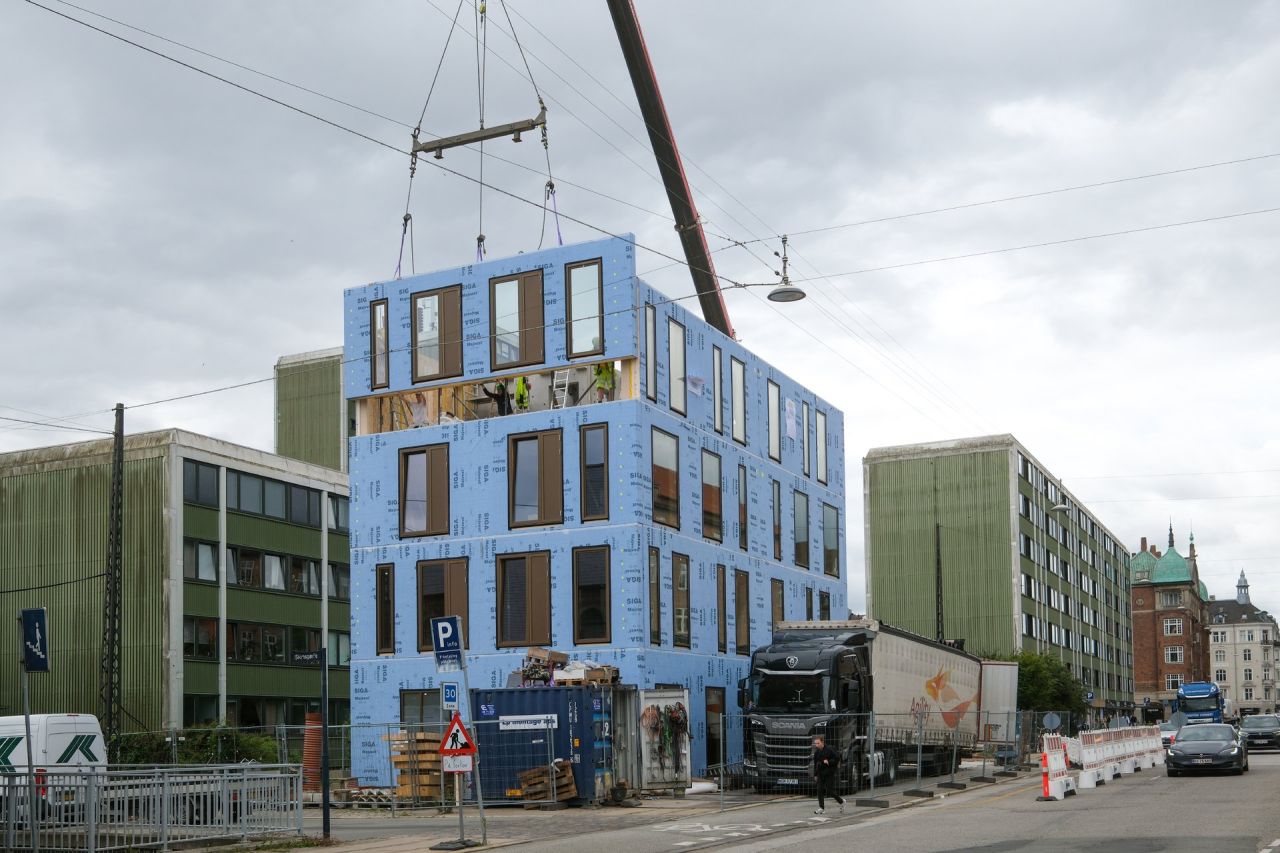
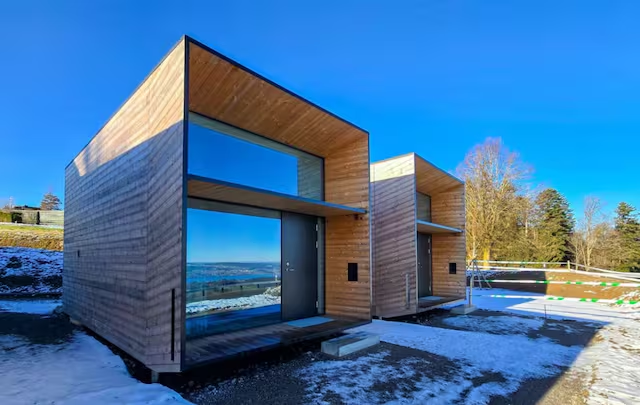
I’m still fairly new to the team, so I haven’t had the chance to work on too many projects yet. But there’s one project in Switzerland that I’m particularly excited about: we’re designing a timber hall to house battery storage for energy generated by a nearby hydropower plant.
It’s a project that brings together a lot of different pieces, structural engineering, building physics, acoustic requirements, fire safety and, of course, the logistics of housing large battery systems.
One of the interesting challenges is making sure the batteries remain accessible if individual units need to be replaced in the future. We’re currently exploring ideas like removable wall elements that would provide direct access to the battery containers when needed.
Battery containers like these are often simply placed outdoors, but because of the project’s location, the client wants to house them inside a hall to reduce their visual impact on the surrounding area.
Finding a solution that brings all of these requirements together, while using timber as the primary structural material, makes this a really interesting project to be part of.
“At first, timber might not seem like the obvious material choice for a building containing large battery systems, particularly when you consider the fire safety requirements. But through close collaboration between the different disciplines, we can develop and verify a solution that makes it work.”


What’s something about engineering in Switzerland that might surprise our colleagues or clients elsewhere?
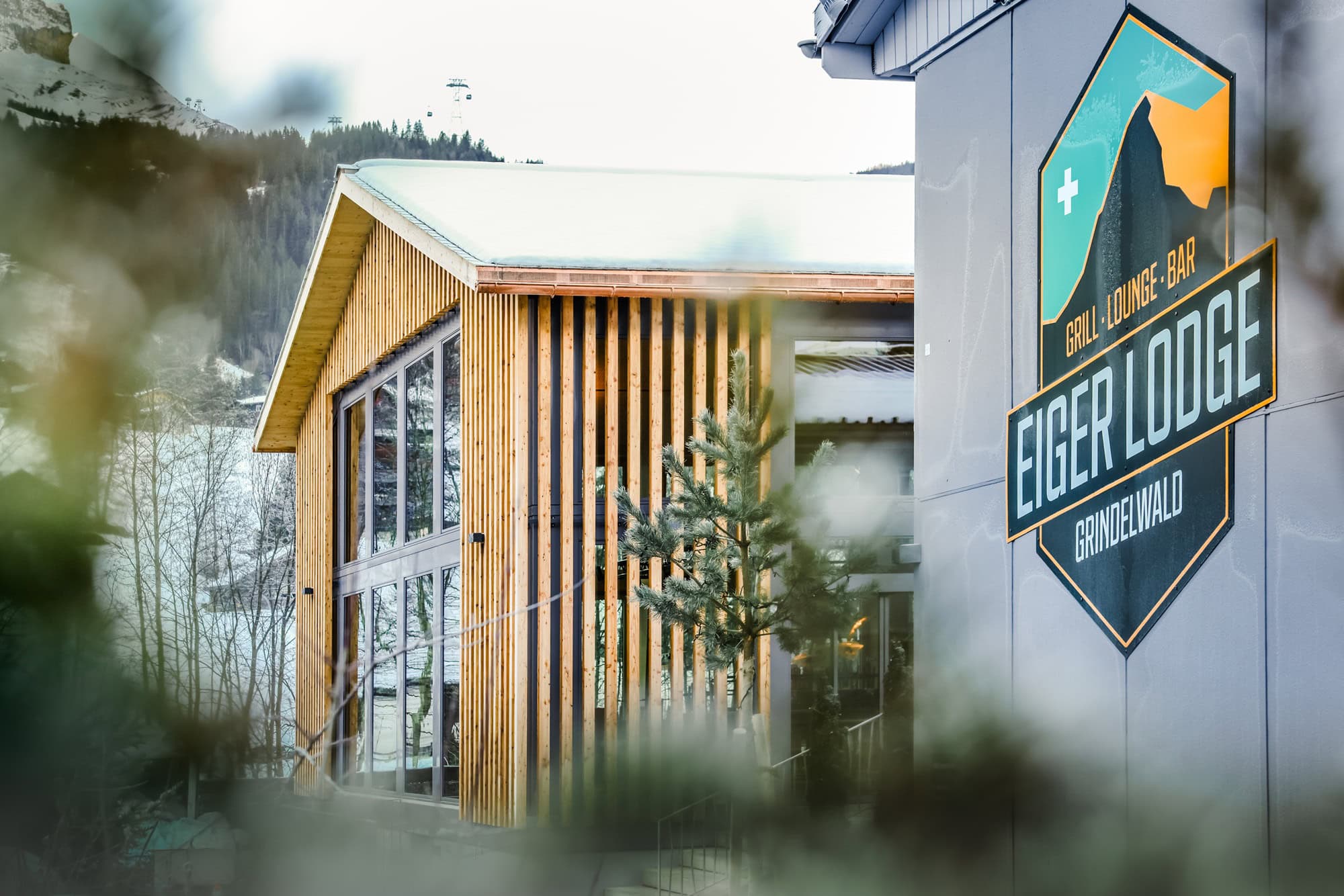
I think one of the things that stands out is the amount of freedom engineers have to explore different solutions. The Swiss codes and regulations, including the SIA standards, provide a clear framework, but there’s still plenty of room for engineering judgement and innovation, as long as we can demonstrate that a solution is safe and feasible.
Engineers are expected to understand the principles behind the standards and take responsibility for the solutions they develop, rather than simply following a prescriptive code.
The battery storage project is a good example. At first, timber might not seem like the obvious material choice for a building containing large battery systems, particularly when you consider the fire safety requirements. But through close collaboration between the different disciplines, we can develop and verify a solution that makes it work.
I really appreciate that engineering here allows room for this kind of innovation and collaboration, while still giving us a clear framework to work within.
What are you currently curious about or learning more about, inside or outside the world of engineering?
I’m quite curious by nature, so it changes all the time. At the moment, professionally I’m particularly interested in timber and hybrid construction and how digital tools can support the design process. Outside engineering, I enjoy learning about architecture and how the structural concept can become part of the character of a building rather than something that is hidden away.
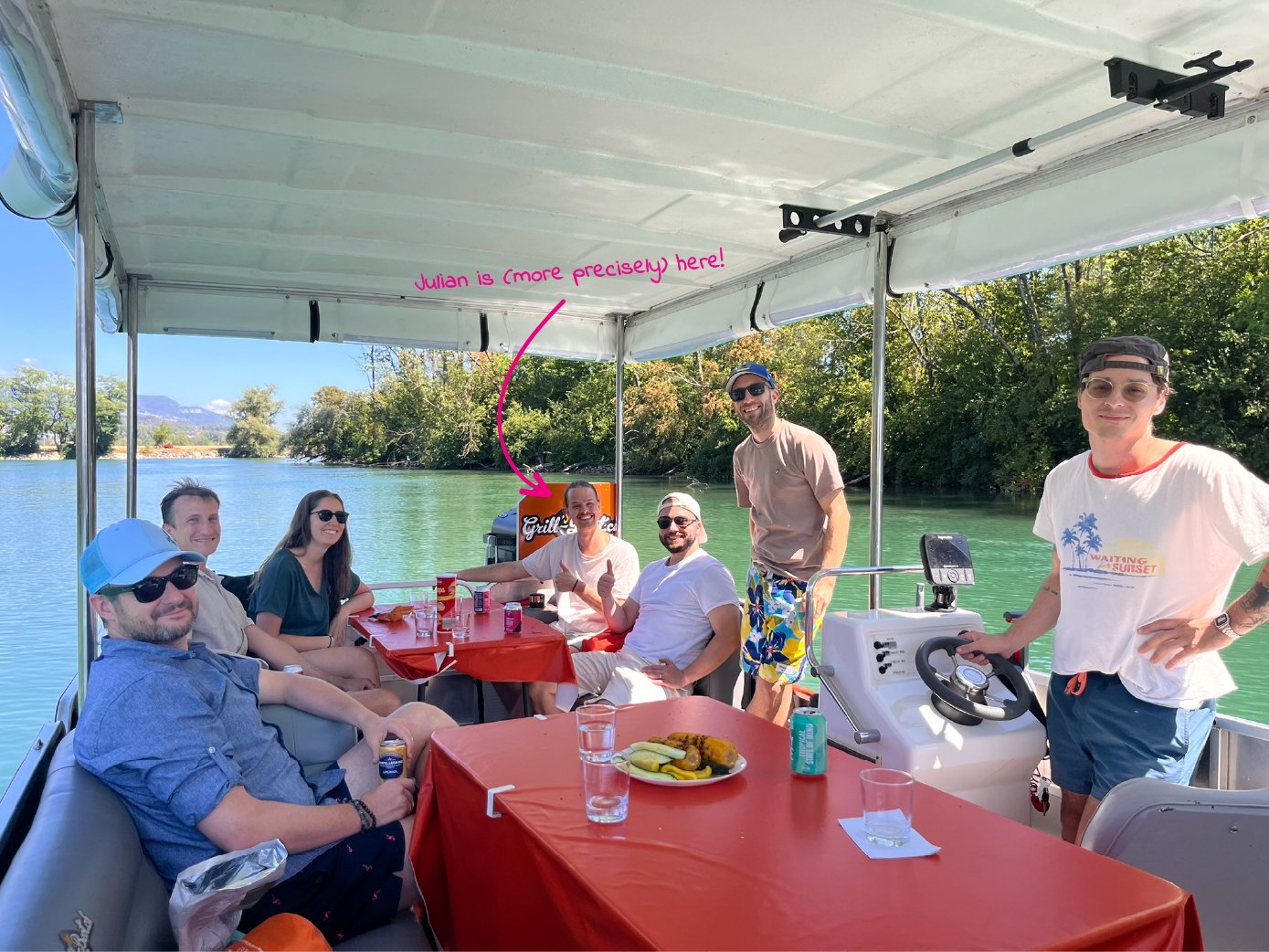
Thanks for the catch-up, Julian and welcome to the ASPECT team!


CEO and Principal, Adam Gerber Named One of Canadian Consulting Engineer’s Top 10 Under 40.
Ask anyone who’s worked with Adam what sets him apart, and you’ll probably hear a different answer every time. Some will talk about his curiosity. Others, his ability to simplify complex challenges or his relentless pursuit of better solutions. Many will mention the questions he asks. The ones that challenge assumptions, spark new ideas, and ultimately make projects stronger.
Those qualities have most recently earned national recognition, with Canadian Consulting Engineer naming Adam one of its Top 10 Under 40. The annual award celebrates emerging leaders who are helping shape the future of consulting engineering through technical excellence, innovation, leadership, mentorship, and industry impact.
For Adam, engineering has always been about more than calculations.
Before becoming CEO of ASPECT Structural Engineers, he worked as a carpenter, foreman, estimator, and engineer-in-training while completing his engineering degrees. Those early experiences gave him an appreciation for the realities of construction that continues to shape the way he approaches engineering today. He believes the best structural solutions aren’t just technically sound. They’re practical, buildable, and thoughtfully aligned with a client’s vision.
That philosophy has helped shape not only Adam’s career, but ASPECT’s approach as a firm.
From concept through fabrication and construction support, ASPECT has built a reputation for working collaboratively with architects, contractors, developers, and fabricators to solve complex challenges. By looking beyond the traditional role of the structural engineer, the firm strives to deliver solutions that improve constructability and streamline project delivery, creating better outcomes for everyone involved.
Adam’s impact extends well beyond the projects he leads. He is an active contributor to the Canadian Standards Association’s task group on timber-concrete composites, a frequent speaker at industry conferences around the world, and has helped develop BCIT’s mass timber micro-credential program to support the next generation of engineers. Whether mentoring colleagues, contributing to industry standards, or sharing knowledge with the broader engineering community, he remains committed to advancing the profession as a whole.
“What makes him especially deserving of this recognition is not simply the nature of his accomplishments, but the way he brings together big-picture thinking, technical knowledge, and practical experience in a way that feels grounded and approachable. He takes more pride in the achievements of the teams he works with than his own.”
— Amir Shahrokhi, Director of Innovation and Award Nominator
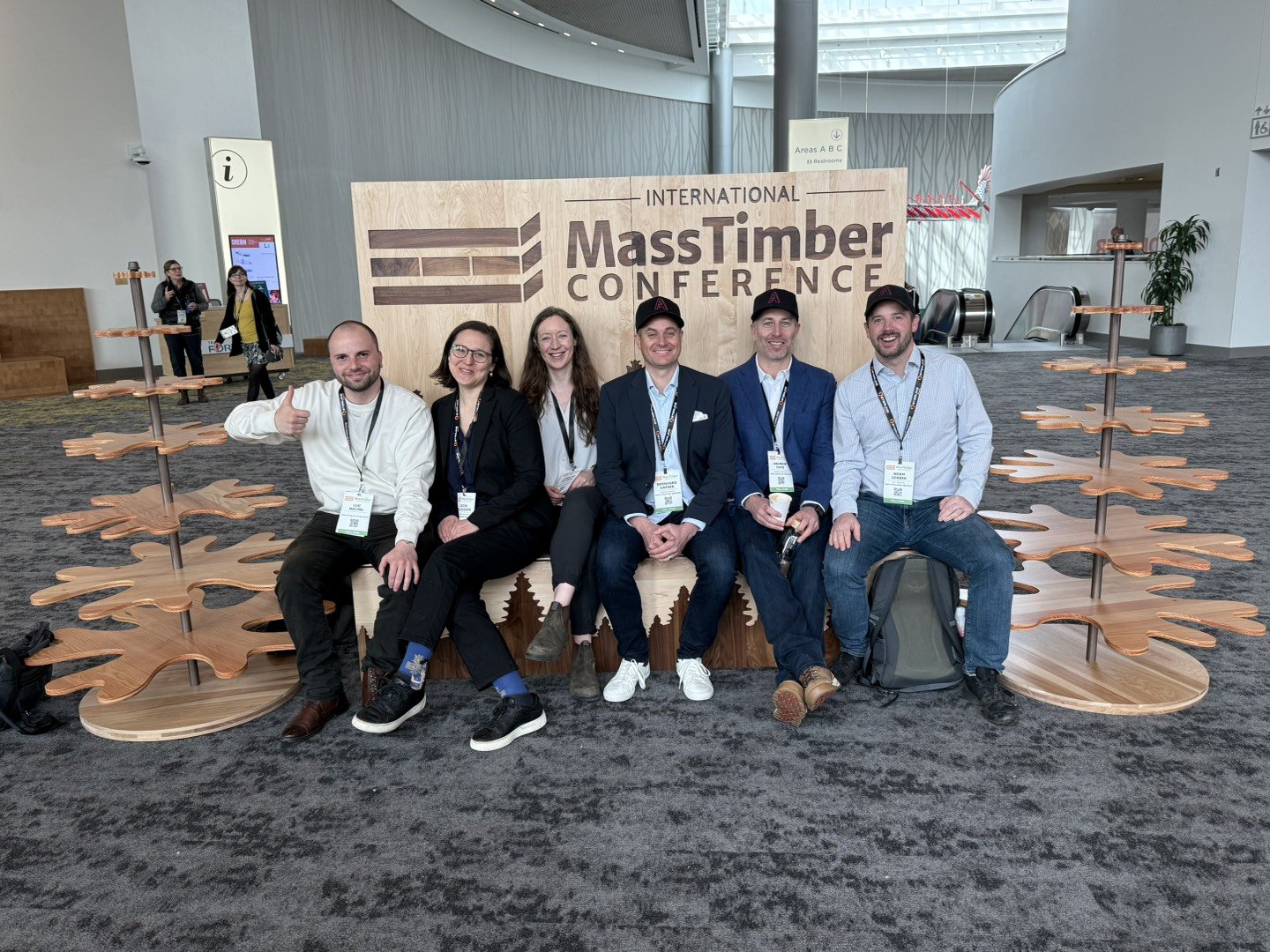
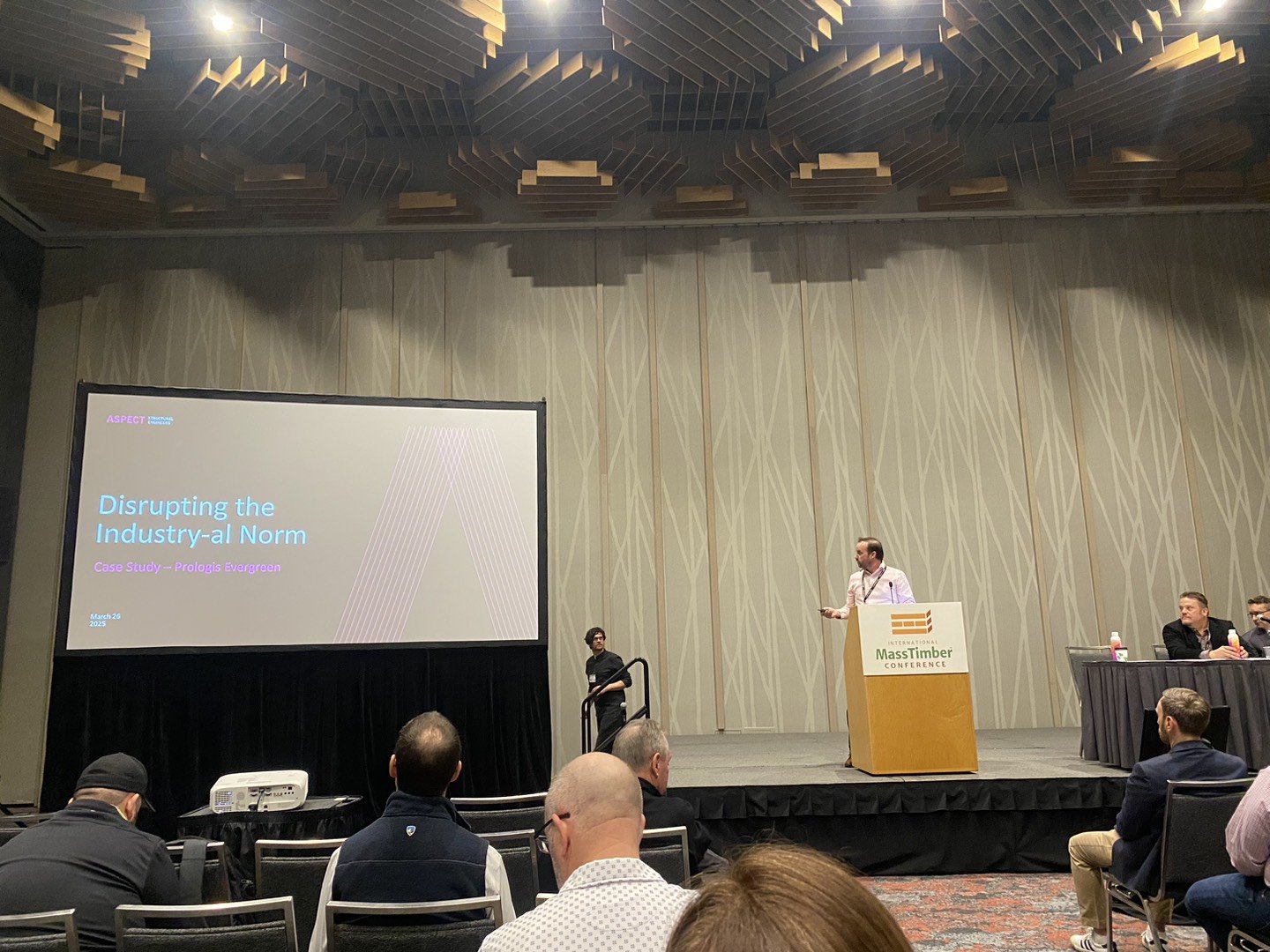
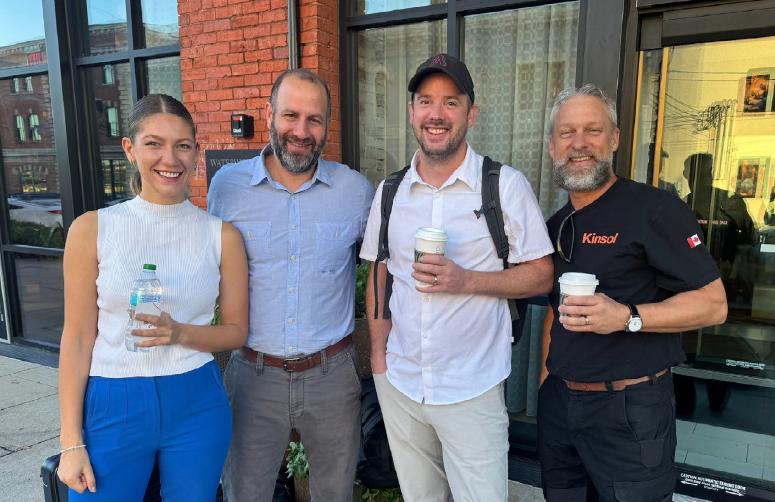
While this recognition celebrates Adam’s individual achievements, it also reflects the collaborative culture that’s been central to ASPECT since day one. Great engineering is never the work of one person. It comes from diverse perspectives, trusted relationships, and teams that continually challenge each other to think differently.
Congratulations, Adam, on this well-deserved recognition. We’re proud to see your leadership recognized on a national stage and even prouder to continue building what’s next together.

ASPECT Team Members Featured in WoodWorks’ “Build with Wood” Campaign
We’re excited to see two ASPECT team members featured in WoodWorks Canada’s new “Build with Wood” campaign, an initiative from the Canadian Wood Council that highlights the people, projects, and expertise helping advance wood construction across Canada.
In the campaign video, Associate, Andrew Hambleton and Senior Structural Designer, Andrew Blackie share insights from their experience working on mass timber and wood construction projects, helping showcase the opportunities, innovation, and collaboration that continue to drive the industry forward.
At ASPECT, we’re proud to contribute to projects that push the boundaries of what’s possible with wood, and we’re always grateful for opportunities to share that knowledge with the broader design and construction community.

Marine Residence Featured in Architectural Digest Middle East
Featured in Architectural Digest Middle East, Marine Residence showcases a contemporary West Vancouver home and the design collaboration behind it.
Designed by OpenSpace Architecture, the residence is defined by its dramatic cantilevered form, expansive glazing, and strong connection to the surrounding forest and ocean views. The article explores the project’s thoughtful integration with its natural setting and the architectural vision that helped bring it to life.
ASPECT provided Engineer of Record services for the project, working alongside the design and construction team to help realize the home’s striking floating appearance and clean architectural expression.

Journal of Commerce: ASPECT BCIT project featured
ASPECT’s work on the British Columbia Institute of Technology (BCIT) Trades and Technology Complex has been featured in the Journal of Commerce.
The article highlights the start of construction on the first three buildings within the multi-phase development, including two mass timber pavilions that will support hands-on training for the next generation of skilled trades professionals.
Designed to reflect the evolving landscape of construction, the project brings mass timber into the learning environment itself, giving students direct exposure to the materials and systems shaping the future of the industry.
ASPECT is proud to be part of the project team as structural engineer, supporting the delivery of these innovative, high-performance buildings.
Read the full article here.


Renderings courtesy of Urban Arts Architecture

Engineering News-Record: ASPECT David Rubenstein Treehouse project featured
ASPECT’s work on Harvard University’s David Rubenstein Treehouse has been featured in Engineering News-Record.
The article spotlights the university’s first hybrid mass timber and low-carbon concrete conference centre, a 55,000 sq ft building designed as a bold commitment to sustainability. Defined by its branching, tree-like structure, the project pushed the boundaries of both design and construction, requiring precise coordination across a highly complex mass timber system.
ASPECT contributed as the mass timber design, providing Mass Timber Specialty Engineering, Design Assist, Temporary Works Engineering, and Fabrication Design services
Read the full article here.
It’s All About the Big Picture
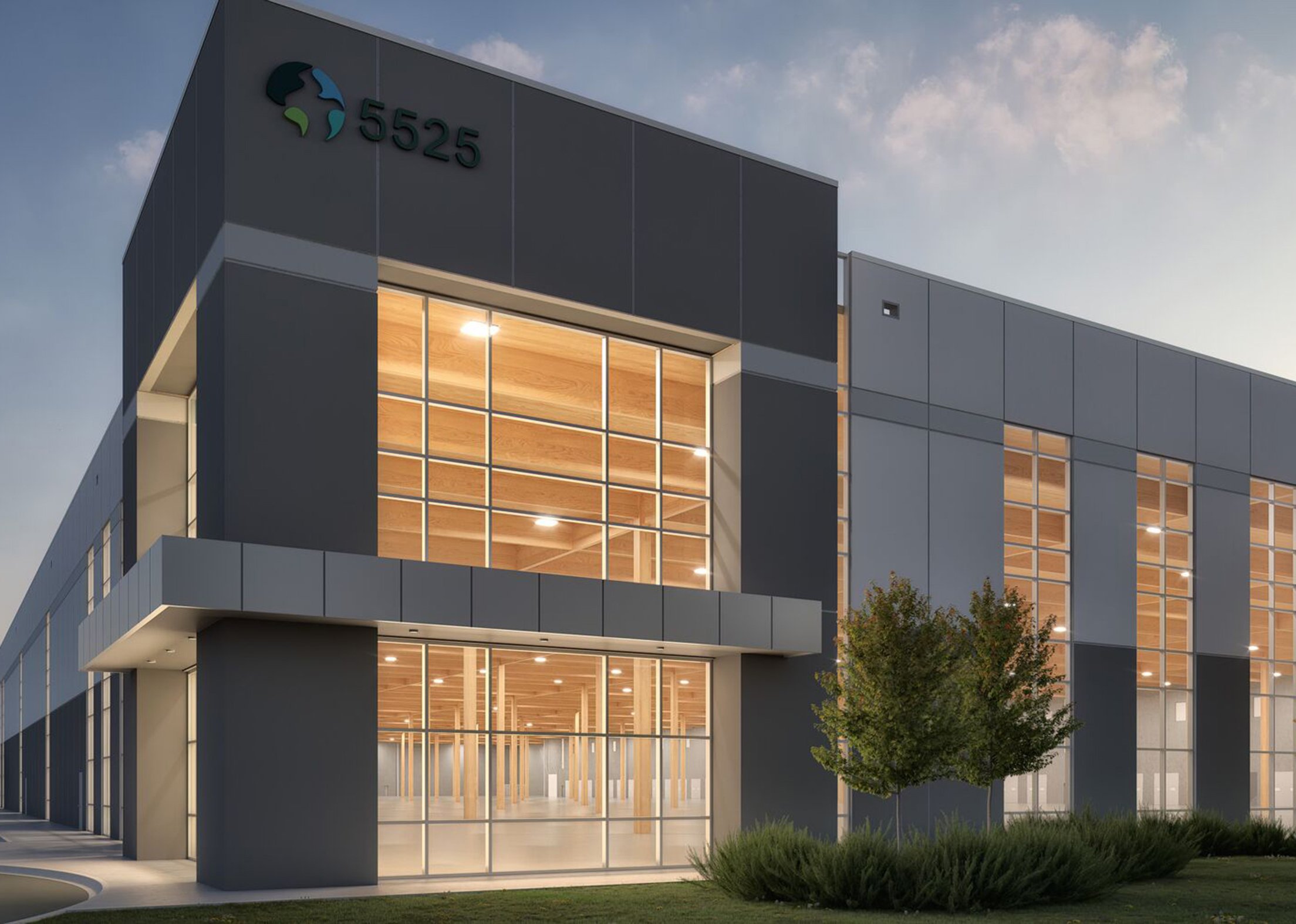
Working with a global real estate logistics leader to deliver their first mass timber distribution centre.
THE CHALLENGE: Disrupting the Industry-al Norm.
When it comes to designing and building an industrial facility, there are typically two major goals in mind: affordability and schedule. The technical aspects of designing these types of buildings tends not to be overly complex, and it often (traditionally) involves largely prefabricated steel and concrete construction.
So, if an industrial facility can simply be designed and constructed to promptly meet demand for warehouse space…why try to reinvent the wheel?
That’s where Prologis comes in: a global leader in logistics real estate with 2.8% of the world’s GDP flowing through their distribution centres. With more than 650 distribution centres across North America alone, in 2022 Prologis set their sights on a new goal: building their first ever mass timber facility.
THE NEED: Big Timber, Even Bigger Impact.
This development is a 246,000 square foot, single-storey distribution centre located in Brampton, Ontario, and the first warehouse of its kind in Canada. At the heart of the ambitious vision for this project is a forward-thinking client with a goal to achieve net-zero emissions by 2040. In establishing this big picture objective, Prologis made the bold decision to try a mass timber structural approach that truly exemplifies their commitment to testing innovative sustainable building solutions for their industrial facilities.
However, the design and construction of a mass timber warehouse is not exactly “textbook” industrial work. Designing for the manufacturing and assembly of mass timber introduces new challenges that require a structural engineering team to understand the nuances around this building material. When ASPECT became involved with the project, the Prologis Evergreen development was already designed to the point of building permit with a conventional steel structure. Even though this design was quite far along, Prologis had their sights set on decarbonizing their infrastructure. It was at this point that ASPECT was engaged to complete a feasibility study, with the mandate to “think outside the box”. Our team put together a study evaluating various structural options – complete with embodied carbon calculations using our in-house embodied carbon calculator, and sufficient details to obtain budget pricing from suppliers – all of which eventually led to Prologis choosing to proceed with a mass timber superstructure.
THE ROLE: Seeing the Vision Through.
Given that the steel structure was already designed and issued for permit, once the decision was made to “go mass timber”, ASPECT was engaged to provide Engineer of Record services and Mass Timber Specialty Engineering services for all mass timber portions of the distribution centre. This included the beams, glulam columns, and overall diaphragm, as well as designing the connections. We collaborated with Gravity Engineering – the structural engineer for the steel perimeter structure and foundations - to help set up the newly mass timber project for success.
As the project progressed, ASPECT was engaged to provide two additional services, ultimately involving three of our internal service teams to help deliver this unprecedented mass timber development. Later, when the project was tendered, ASPECT was engaged in an additional capacity by Element5 (mass timber supplier) to provide Fabrication Design services. The mass timber installer, Kinsol, also hired ASPECT to assist with Temporary Works engineering, providing erection design services for the construction phase of the project.

THE OPPORTUNITY: Using Creativity to Create Efficiency.
Rather than setting up the project for mass timber from the very beginning, this specific project required unique creativity from the team to work within the constraints of the steel structure and grids that had already been designed and committed to. However, through an evaluation of various structural options, and with particular consideration given to the building’s carbon footprint, the existing design, and overall cost-efficiency, ASPECT helped identify and evaluate the most appropriate solutions to allow for the incorporation of mass timber.
Repeatability.Through the process of redesigning to incorporate mass timber, the typical 54-foot by 50-foot grid layout became a challenge. While a different grid may have been more efficient for mass timber, our team took on the goal of finding other ways to optimize as many sections of the design as possible. Examples of such efficiencies became quite granular – right down to reviewing how many screws we could save, or closely examining panel thickness. Given the size of this development (roughly the equivalent of 4.2 NFL football fields), reducing any one of these items by even five per cent results in a large impact on the project’s cost and overall efficiency.
Size. Working on a project of this scale, the size of the building itself — and, in turn, all the beams and columns within — were a challenge in their own right. As early as possible, different beam types were evaluated for cost efficiency. However, the importance of taking the overall project size into consideration became prominent when the determining factor was ultimately whether the crane could lift some beam sizes over others. ASPECT accounted for size during the design phase, with a view to constructability from the very beginning. As the project moved to construction, ASPECT also assisted Kinsol with erection planning and design to allow for extra bracing and coordinate the logistics involved in how to put all these building components together on site.
Leveling out the costs. While most steel and metal deck buildings have large interior steel frames to support the structure for wind and seismic loads, metal deck diaphragms cannot span as far as cross-laminated timber (CLT). Given the use of CLT in the new design, we were able to eliminate the interior steel frames and their foundations, which are both costly and carbon intensive.
MEP Coordination. With wood construction, the mechanical equipment needs to run under the beams or needs to be coordinated to go through the pre-cut (and potentially reinforced) openings in the beams. Given the building typology, and the MEP needs for such a structure, the best approach was to account for holes in the beams that would allow the sprinkler pipes to run through. If this detail wasn’t accounted for in advance, mass timber installation would not take place on schedule, which would result in overall project delays. ASPECT worked with the mechanical and electrical design teams to coordinate the openings needed within the large beams.
THE RESULT: One Big Step for the Client Company, One Giant Leap for the Industrial Sector.
Now in the construction phase, this facility is well on its way toward anticipated completion at the end of 2025, with the mass timber superstructure set to be completed November 2024. The client, design, and construction teams continue to learn from the experience of building a one-of-a-kind mass timber warehouse facility, working together to keep this project on track.
Based on this experience, we’re confident that there is a significant opportunity for mass timber in this market sector. The structural approach taken to deliver an industrial building of this scale can be further refined and applied to future developments, and potentially transform this market sector. The final design for this building will result in a 24% (approximately) reduction in embodied carbon emissions over the entire building structure, setting a new standard for the built environment surrounding this market sector.
A key player in the real estate logistics market with a clear view of the big picture – that’s how real change happens.
_______________________________________________________________________________________________________
PROJECT TEAM:
Owner: Confidential
Architect: Ware Malcomb
Mass Timber Supplier: Element5
Mass Timber Installer: Kinsol
Engineer of Record (Foundations + Steel): Gravity Engineering Inc.
General Contractor: Leeswood Construction

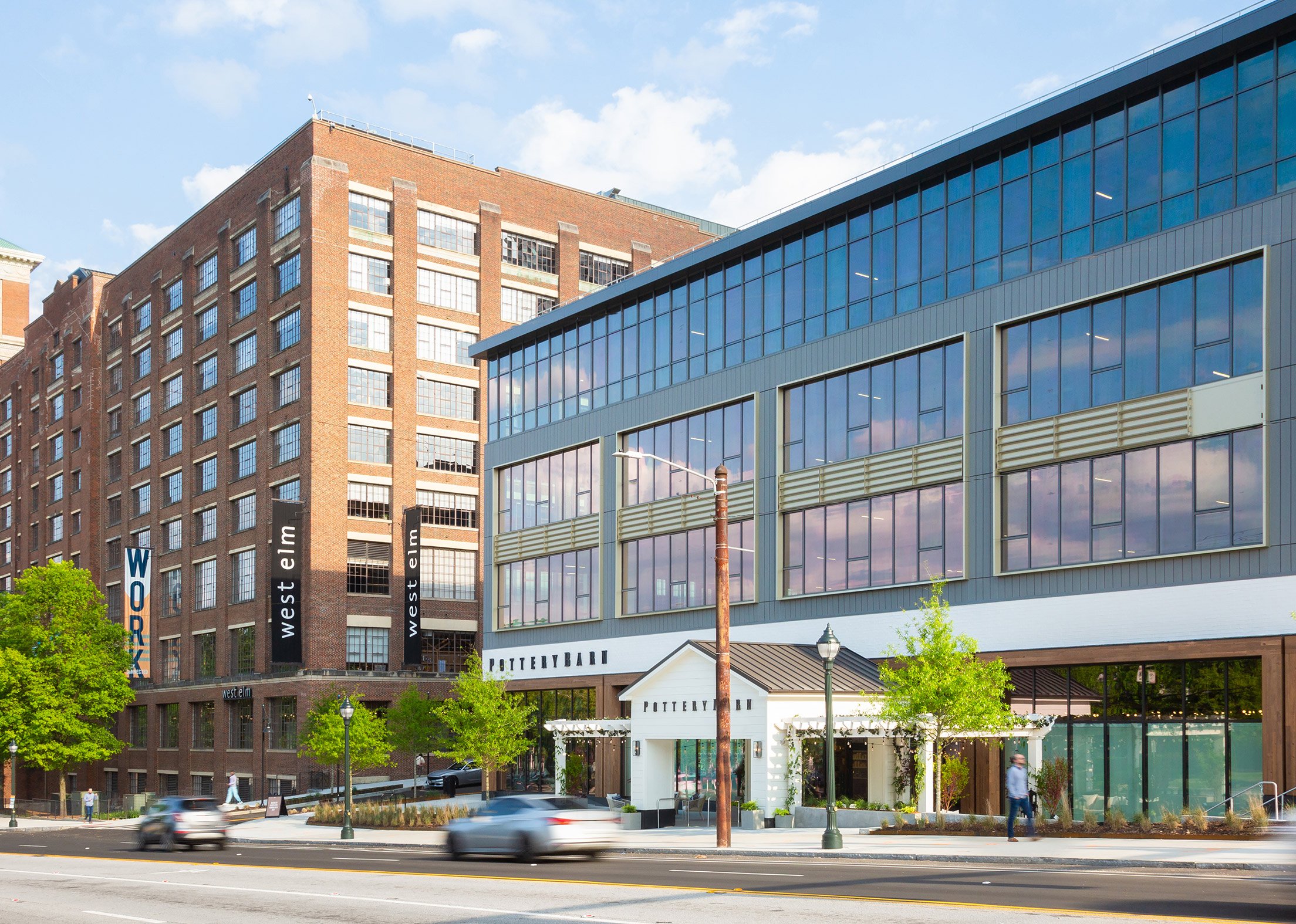
The Legend of Local Lumber
Providing Mass Timber Advisory Services for Georgia's first Georgia-grown Mass Timber Building.
Photos courtesy of Jamestown LP
THE CHALLENGE: Seeing the forest from the market.
When mass timber is considered for a development, it’s typically due (at least in part) to the building owner’s commitment to environmental stewardship. Yet, currently, most timber for mass timber construction in the U.S. is not sourced locally – a fact that, for many building owners and developers, has the potential to dampen the overall efficacy of a development’s big picture sustainability ambitions. Sourcing a quality timber supply locally can indeed be challenging, but not impossible.
Finding and using quality local timber was the goal of Jamestown LP – the owner of the 619 Ponce development in Atlanta, Georgia – from the earliest stages of the project back in 2020. They just needed an advisor to help make it reality...
THE NEED: Peachy-keen on timber.
619 Ponce is a four-story mass timber office building located at Ponce City Market in Atlanta, and includes approximately 87,000 square feet of office space over three floors, and 27,000 square feet of retail space at ground level. When it was initially envisioned, a true mixed-use development was needed in this neighbourhood, and mass timber appealed for both its embodied carbon benefits and its aesthetic beauty.
Georgia is the number one forestry state in America, but there was still a need to evaluate the potential of the lamstock coming from Georgia-based forests before it could be used in the cross-laminated timber (CLT) and glulam members in the proposed design. Due to our in-depth knowledge of the mass timber industry, Jamestown reached out to ASPECT in 2021 for some friendly project advice. Given Jamestown’s clear goals and vision for the project, we knew that we would be able to effectively support the project team in gaining a clear understanding of the mass timber supply chain.
This would not be a project where we provided our typical engineer of record or standard structural engineering services. Instead, our focus was the role of Mass Timber Advisor – providing support for the design team for mass timber framing and detailing concepts, as well as procurement and planning guidance during the design phase of the project.

THE ROLE: An outside perspective.
While not always required for a project, the role of Mass Timber Advisor is increasing necessary for mass timber projects and, when hired or provided directly by the contractor or supplier, is also known as “Design Assist”. For this proposed Ponce City Market development, we were instead engaged directly by the developer to offer the Mass Timber Advisory services needed. Jamestown knew that that this advice would be particularly important for the overall success of the development, given the highly-specific needs of a commercial office building to make it competitive (such as grid flexibility for future tenant fit-outs). There would be little room for error, and they wanted to make sure they were setting their project up for success from the very beginning.
Once ASPECT was engaged, we began meeting with the project team and reviewing the documentation provided to date. Before jumping to solutions, we wanted to understand the initial thinking around implementation of mass timber for this project. Through these discussions, we began to work with the team to re-define and align the project goals, budget, timelines, and risks through the lens of mass timber. Considerations such as floor vibration, timber detailing, coordination of steel and timber, site constraints, and installation options were all discussed at great length.
Whenever ASPECT is engaged in a Mass Timber Advisory capacity, there are certain steps we take after we’ve gathered all of the required information and review internally as a team. This information starts to form a “statement of requirements” for the project – a long list of what we’ve learned so far, and what we understand the goals to be for the project.
We then take this “statement of requirements” and categorize the information it contains under five main headings:
- Prerequisites
- Design Considerations (What type of lateral system might be required? Are there key considerations around wood movement and vibration criteria? What about energy / envelope performance?)
- Fabrication (How we’re going to build the structure? Do we have the right trade and talent pool?)
- Construction in the field (What are the tolerances of different materials and systems?)
- Usage of the building (What do we need to understand around MEP flexibility, for example?)
Each requirement is aligned with what that requirement could have an impact on (Design, Fabrication, Installation, or Use), and the team openly discusses what the right solution could be to each requirement. This approach helps to organize the information collected during this preliminary “information gathering” stage, as well as trigger helpful questions from the client. The conclusions of this exercise form a a “Project Requirement Matrix” – a document that can be referenced throughout design and construction as a “gut check” and source of alignments.
That’s when the fun part REALLY begins…
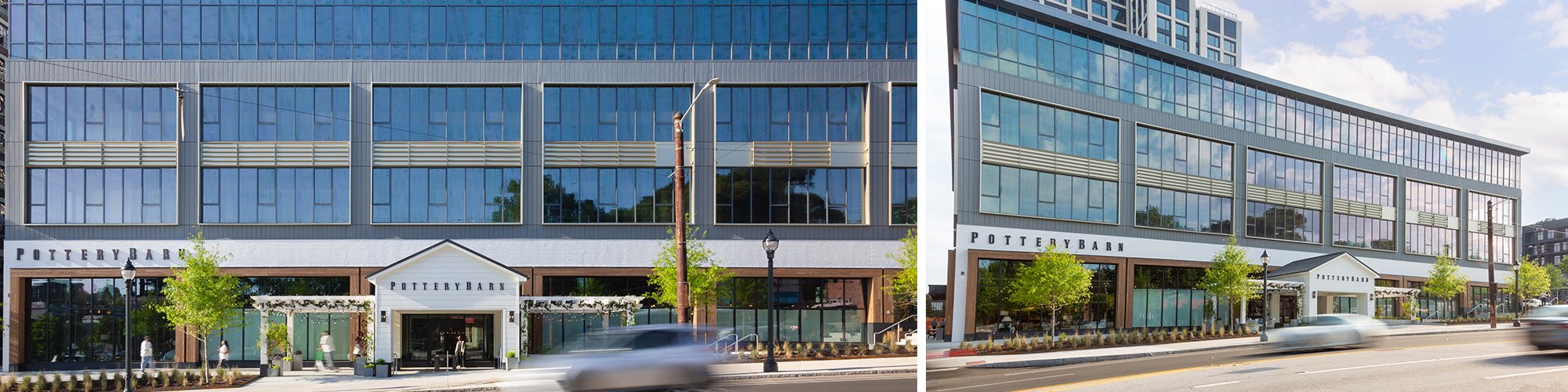
Photos courtesy of Jamestown LP
THE SOLUTION: Making mass timber make sense.
With project-specific challenges and parameters identified, we needed to look at the full range of mass timber products available on the market. Each of these products had to be evaluated both in terms of their suitability for the project as a whole, and their fitness for this project from a supply, risk management, and constructability perspective. The manufacturing processes for the various products and geographic areas (across North America as well as Europe) were compared and evaluated where relevant. ASPECT’s focus was to provide all of the information to Jamestown as agnostically as possible so that they could choose the materials that made the most sense for them.
In tandem, we worked with the design team to develop suitable framing and connection concepts that would meet the specific needs of the project. While we provided 3D modelling as an option, at this stage it made more sense to provide high-level concepts that demonstrated code compliance. Due to our knowledge and experience providing this level of detailing on other projects that gave both Jamestown and the design team the confidence they needed early on, without having to move forward with commitments that could have financially compromised the project. By focusing on these relationships and building necessary connections, ASPECT was able to play a small yet pivotal role in bringing together stakeholders along the supply chain to enable conversations that eventually led to incorporating a Georgia-based timber supply.
THE ADVANTAGE: The pieces fall into place.
At this point in the process, even though 619 Ponce was still in the early stages of design, ASPECT was already thinking about installation. When you’re working with mass timber, timing around when materials need to be purchased, when they need to arrive on site, and the sequence in which everything needs to come together is a complex choreography.
Building a strategy that the design and construction team could evolve as the project progressed, ASPECT worked with the team to evaluate potential installation sequencing options and timelines, including one-on-one conversations with the general contractor and several sub-trades. We worked with the project team to develop a procurement strategy for mass timber, in consideration of supplier proximity, capacity, experience, and availability. Our team also flagged some potential required code alternatives by the Authority Having Jurisdiction (AHJ), and supported the team in developing a strategy around these requirements.
This early planning and advisement set the project on course to achieve significant budgetary and scheduling goals – while also providing the confidence that working with the local timber supply would not only work for the project, but also provide real benefits for the project.

THE RESULT: A "bit part" that makes a big difference.
ASPECT’s role on 619 Ponce ended in July 2021 – months before design was ultimately completed, and well in advance of construction start. As structural engineers, it’s odd to discuss a role that requires our knowledge as engineers, without providing the technical, final input as the engineer of record. At the same time, Mass Timber Advisory work is a service that few developers would know exists, much less could picture making a difference. But Jamestown had a clear vision for this development, and they knew that advice from the earliest stage of the project would simplify the role of nearly every design and construction team member down the line. We’re happy to provide this type of assist when that’s what a project or client requires; if you don’t have the right people in the right seats, you’re bound to paddle in circles. On this project, we were in the right seat at the right time.
The full 619 Ponce development was completed in late Spring 2024, and is a testament to the strength of not only the local commercial market but also the local forestry industry. The mixed-use office building will, no doubt, provide a model for future development in Atlanta, across Georgia, and throughout the United States.
_______________________________________________________________________________________________________
IN THE NEWS:
https://news.gp.com/2023/02/southern-yellow-pine-yesterday-today-and-tomorrow
PROJECT TEAM:
Owner: Jamestown LP
Architect: Handel Architects
Engineer of Record: DeSimone Consulting Engineers
Timber Contractor / Timber Engineer of Record: StructureCraft
General Contractor: JE Dunn
Timber supplier (CLT & Glulam): Smartlam


ASPECT Structural Engineers selected as one of Canada’s Top Small & Medium Employers
The global structural engineering practice joins a competitive list of top employers in the 2024 “Top 100 Employers” Project.
The 2024 list of “Canada’s Top Small & Medium Employers” was announced this morning in a special magazine published by Mediacorp Canada Inc. The Top Small & Medium Employers category focuses on smaller enterprises with less than 500 employees, and is part of the “Canada’s Top 100 Employers” project. Conducted since 1999, this project includes 19 regional and special-interest editorial competitions that reach Canadians annually through publications such as The Globe and Mail.
Canada’s Top Small & Medium Employers is a competition that is now in its 11th year, and recognizes the small and medium businesses (SMEs) that offer the nation’s best workplaces and more forward-thinking human resources policies. Applicant employers are evaluated across eight categories of criteria:
- Workplace
- Work Atmosphere & Social
- Health, Financial & Family Benefits
- Vacation & Time Off
- Employee Communications
- Performance Management
- Training & Skills Development
- Community Involvement
The announcement noted that, this year, the competition for recognition amongst SMEs was stronger than ever. The competition is open to any company in Canada that has less than 500 employees worldwide, and is a commercial, for-profit business. Kristina Leung, management editor of the Canada’s Top 100 Employers project, noted that, “What’s remarkable about the employers on this year’s list is how quickly and effectively they’ve worked to create rewards and other programs developed from employee input…SMEs have enviable levels of customization, flexibility, and speed-of implementation that are difficult for larger employers to match.”
This is ASPECT’s first year recognized on the list since the firm was first founded in 2016.
“Creating an environment that established new possibilities for what a workplace could be was a big part of why we started ASPECT,” says Gina Sheppard, COO and one of the Founding Principals of ASPECT. “Of course, this recognition means so much to the leaders who started ASPECT – Andrew Chad, Bernhard Gafner, Mehrdad Jahangiri, Adam Gerber and me – but it is actually a direct reflection of the incredible people that make up ASPECT today. There are so many team members who set the “tone” for who we have become as a firm, and who have since stepped up to become leaders of ASPECT and of the industry.”
Some of the reasons for ASPECT’s selection, as identified by the jury panel, include:
- Maintaining a formal hybrid work policy that enables employees to work from home for up to two days per week as well as the option to work from anywhere for up to two weeks per year.
- Providing flexible work hours.
- Encouraging employees to adopt healthy habits with an annual fitness allowance of $600 that can be put towards any type of physical activity (examples include gym memberships, ski passes, fitness classes, or personal training sessions).
- Taking a thoughtful approach when employees are called upon to care for their loved ones, providing compassionate leave top-up of up to 80 per cent of salary for 15 weeks.
- Supporting employees with $1,500 in tuition subsidies for job-related courses per year.

Stories and photos surrounding the ASPECT work culture, values, and overall approach can be found through the competition homepage, along with a complete list of this year’s winners.
Recipients of this year’s award will be recognized at an award ceremony this evening. Read the full press release here.
If you have any questions about this or other ASPECT awards, please contact:
Director, Marketing & Communications
sam@aspectengineers.com
_______________________________________________________________________________________________________
About ASPECT Structural Engineers
ASPECT Structural Engineers is a globally acclaimed, full-service structural engineering firm. Founded in 2016, we are now a cohesive team of more than 50 engineers, fabrication designers, technicians, and support staff. Through thoughtful yet pragmatic design practices and rigorous training, the engineers and designers at ASPECT understand not only their role in contributing to a project, but also how to support the roles of others.
Many members of the ASPECT team started their careers in other disciplines, pulling from their experience working with carpenters, contractors, suppliers, or architects to contribute to a wider understanding of the value that structural engineers can bring to a project. Our team-based approach focuses on better design, improved constructability, and unwavering accountability.
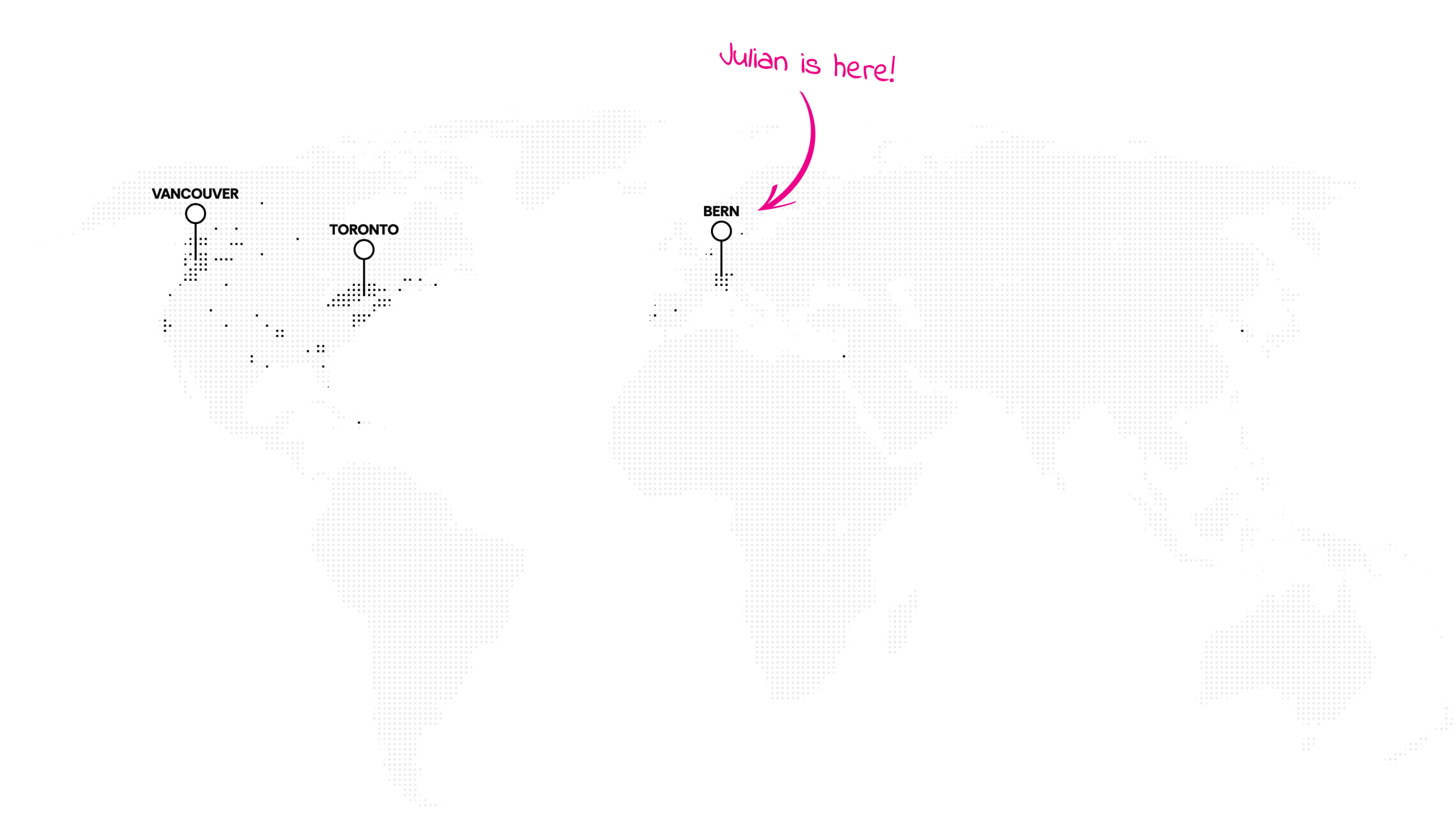
From the beginning, ASPECT has been driven by the importance of true sustainability, underscoring our commitment to understanding, and educating others on the benefits of, mass timber. Beyond producing award-winning structural engineering work for everything from office buildings, to bridges, to custom homes, we also dedicate a substantial amount of time to working with other industry leaders - industry suppliers, architects, and clients - to work through new ways to design and build for the future. Our diverse team is active in markets around the world, with dedicated offices in Canada (Vancouver and Toronto), Switzerland (Bern), and the United States (Seattle).

Camera House Recognized at AFBC Architectural Awards of Excellence
This custom single-family home in Pemberton Valley, BC, was recognized for design excellence by The Architecture Foundation of British Columbia (AFBC).
The AFBC is a non-profit organization that aims to advance architecture and design within the province of British Columbia. Each year, the AFBC recognizes projects that demonstrate modernization, diversity, and inclusivity in architecture.
This year, Camera House received recognition for Design Excellence in the Single-Family Residential category. Built as a rural retreat for a young family, the home is situated on a sloped, five-acre lot in Pemberton Valley. The home’s moniker is a nod to the way the dramatic windows and skylights frame the surrounding landscape like a camera lens. Capturing incoming light, the design emphasizes a connection to the natural environment while offering scenic views of the mountain ranges. The roof structure is comprised of a series of 3-series sided boxes, allowing the architecture to open up views to the natural scenery through clerestories. 2x trusses were used to simplify backframing and create the vaulted interior ceiling. The project also includes a workshop building and pool shell.
We would like to congratulate our friends at Leckie Studio for this prestigious and well-deserved recognition! The ASPECT team is proud to have provided Engineer of Record services while working with Leckie Studio as they led this award-winning project.
For more information about the AFBC Architectural Awards and to see the full list of winners, click here.

_______________________________________________________________________________________________________
ASPECT regularly works with and advises on custom home projects and has built a dedicated team, uniquely qualified for this type of work. Check out the Projects page to take a look at our wider portfolio.