

Creativity in a Systemized Approach
Earlier this year, ASPECT was recognized on an international stage as Innovator of the Year at the 2025 CREE Awards. The award reflects the depth of ASPECT’s involvement across the CREE ecosystem — a systemized, timber-hybrid approach to buildings. From feasibility studies to structural engineering, and fabrication-ready modelling to site coordination, our focus has been on improving reliability, constructability, and performance at every stage.
We sat down with Founding Principal, Bernhard Gafner and Associate Engineer, Thomas Brotschi to talk about ASPECT’s role within the global CREE Network, the nature of systemized innovation, and how repeatable design can still leave room for creativity.
What does the Innovator of the Year recognition represent for ASPECT?
Bernhard:
Innovation isn’t a single moment. It comes from doing the work, evaluating what happened, and finding a way to make it better the next time. CREE shares that mindset.
While the CREE system is a well-oiled machine, it continues to evolve project by project. ASPECT contributes to that evolution through engineering, detailing, and problem-solving that strengthens the project team, and subsequently, the system overall. This award reflects a commitment and relationships that have been building over many years.
Thomas:
It also highlights the type of innovation that often happens behind the scenes. We work really closely with fabrication and installation teams. A lot of our contribution comes from refining details, anticipating challenges, and adjusting the system so it performs well in different climates, codes, and construction cultures.
Studies and competitions to support the evaluation of potential CREE projects (cost and time)
Working with project teams to evaluate or establish timelines Full Structural
Engineering of the CREE system, often in collaboration with a local team
Support the local team in obtaining project specific jurisdictional approvals
Integration of prefabricated solutions for lateral system (precast concrete or structural steel) to streamline the DfMA approach
Development of novel solutions in response to project specific challenges
Full fabrication design (3D modeling / shop drawings) for all CREE components
Collaboration with local installation teams and providing Temporary Works
Engineering including sequencing plans

How did ASPECT first become involved with CREE?
Bernhard:
My first connection with CREE goes back to a presentation they did in Vancouver. Long story short, the ideas resonated with how ASPECT thinks about building and the rest is history! Over time, we became more involved in the partner network, helping CREE and their local teams navigate structural requirements in new regions. The trust has grown because we understand how the system works at a deep level and because we are committed to helping the network succeed as it expands globally.
What role does ASPECT play during early feasibility work for CREE projects?
Thomas:
Early phases are important because they set the tone for the entire project. We look at program, spans, grid layouts, lateral systems, site logistics, timelines, and cost. The goal is to determine whether the CREE system is a good fit and if it is, how it should be adapted. Our structural insight helps clients understand what the system can do, what it cannot do, and how to position the project for success before detailed design starts.
Bernhard:
The earlier you identify constraints, the better. We take a holistic approach to looking at how these constraints may affect later coordination. When you address them early, you reduce the risk of surprises during fabrication or installation.
How does ASPECT support the technical engineering of CREE buildings?
Bernhard:
We provide delegated structural engineering for the core CREE components, including slabs, beams, columns, and non-load-bearing wall elements. That involves working closely with local engineers, so the system meets regional codes and performance expectations.
Thomas:
Every region has its own requirements. Some areas need higher fire ratings, while others have specific seismic, vibration, or moisture considerations. The CREE system has an established logic, but the details adapt. ASPECT provides the link between global intent and local execution when it comes to structural engineering.
Prefabrication is central to CREE’s model. How does that influence your work?
Thomas:
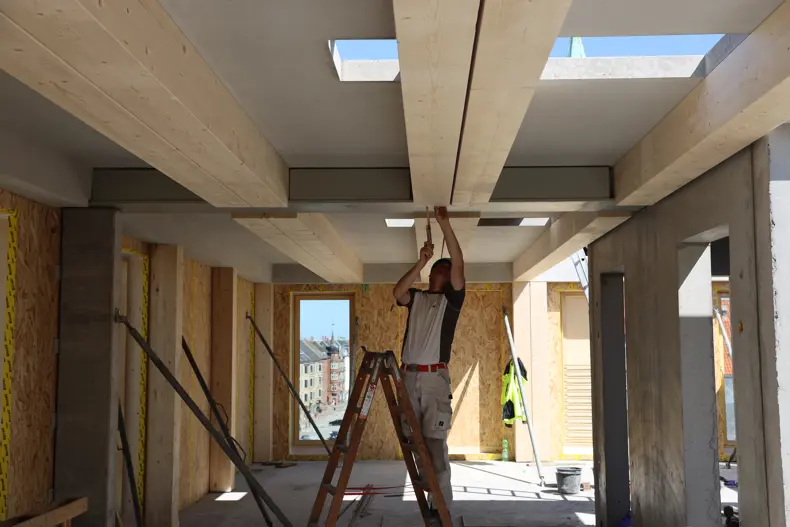
Prefabrication demands accuracy. When a component is manufactured before it arrives on site, every interface has to be understood. One advantage of CREE is that once you understand how a detail performs, you can repeat it with confidence. That helps us direct more effort toward the complex conditions where projects differ.
Bernhard:
It also increases collaboration, which leads to better results. Architects, engineers, fabricators, all work together earlier, and the clarity of the system helps everyone move in the same direction.
Can you share an example where ASPECT helped evolve the CREE system for a project-specific need?
Thomas:
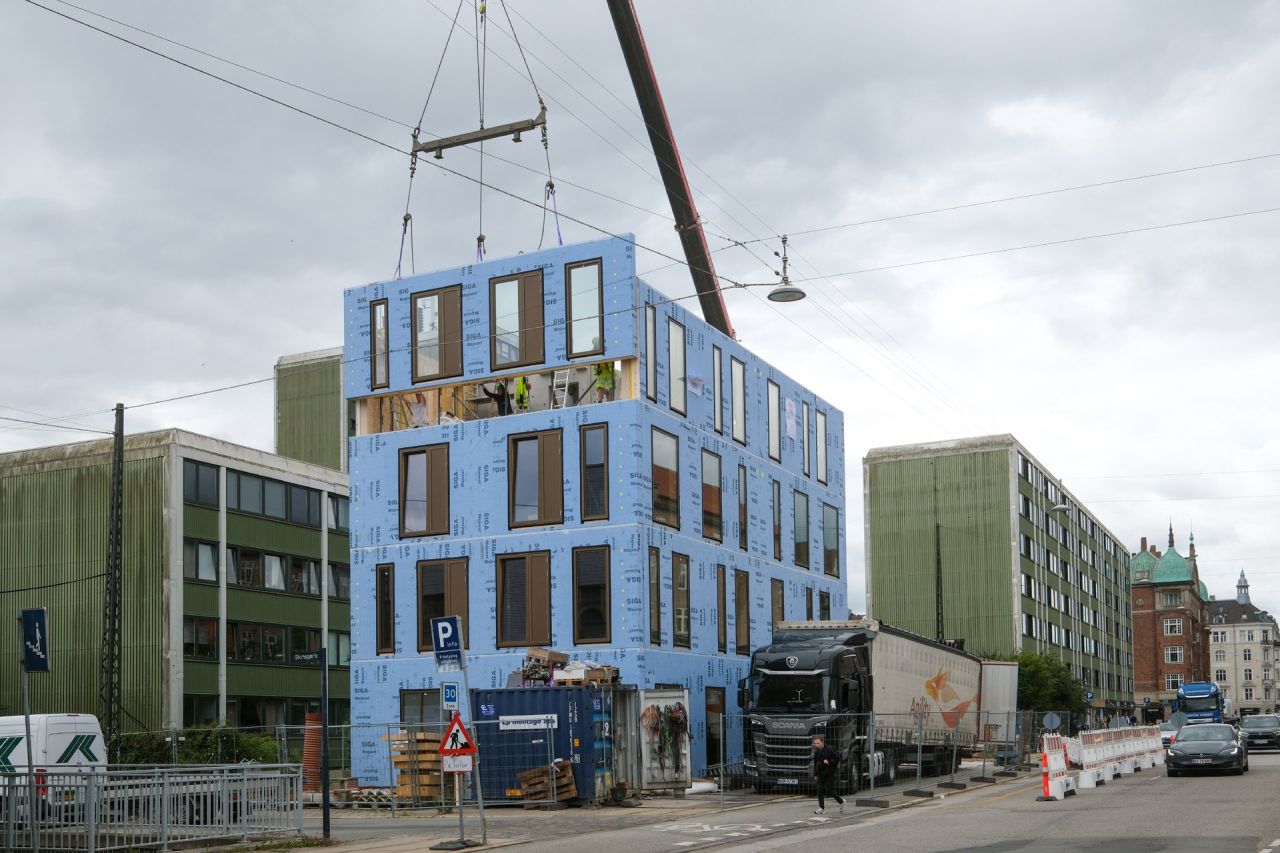
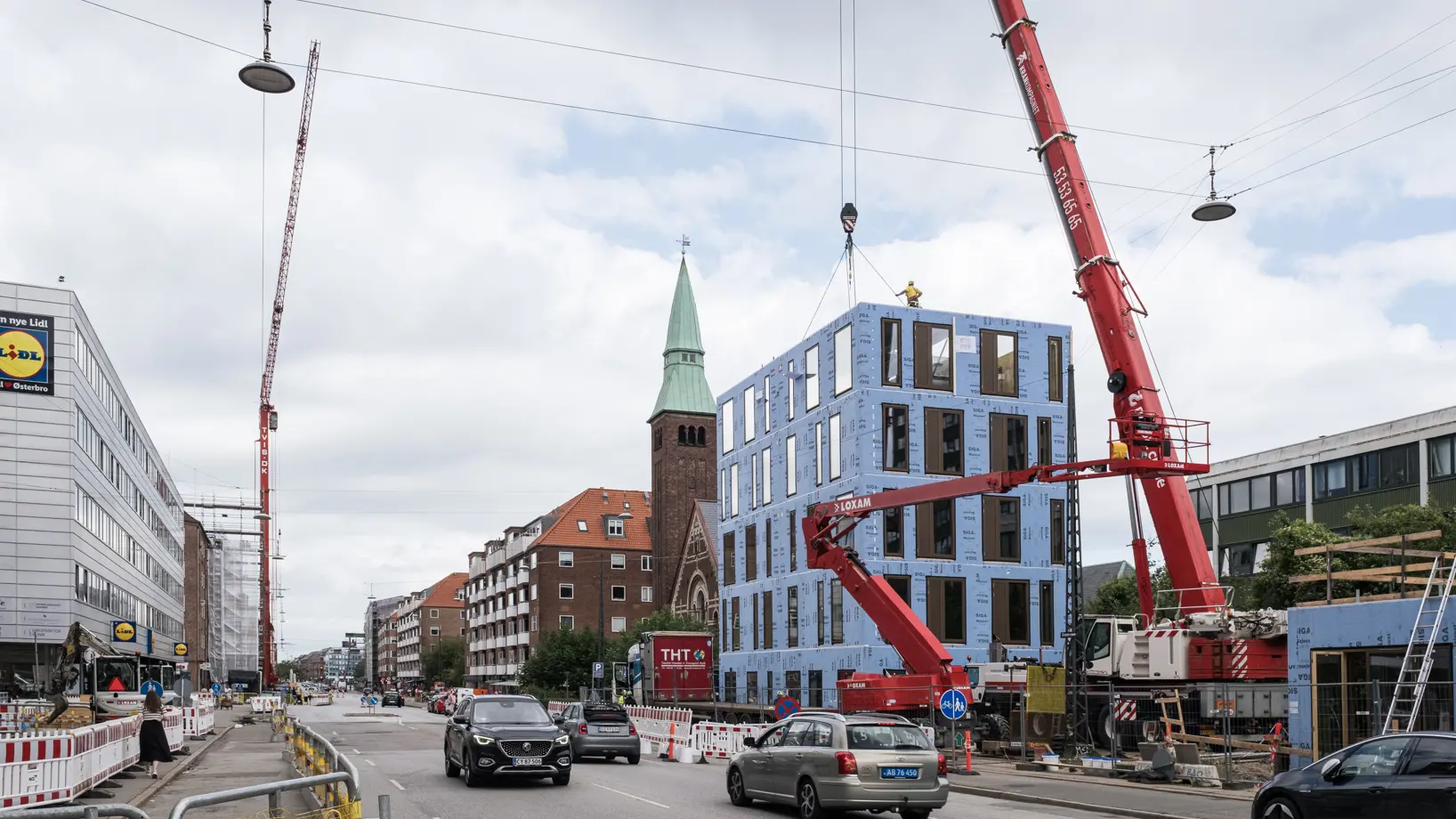
One of the initiatives I spearheaded was the creation of a new connector for our Østerbrogade 190 project, in Copenhagen. The project required columns to resist significant tensile forces and the standard CREE detail was not designed for that. We collaborated with Hilti and the local engineering team to create a connector that addressed the loading while still fitting within the logic of the system. And now CREE is using it on other projects! This goes to show that a single innovation can improve the system for everyone.
How do you approach innovation within a system that is already defined?
Bernhard:
Some breakthroughs are large, such as new connection types or structural strategies. Others are incremental refinements. Small adjustments to a plate thickness, bolt pattern, or interfaces that can have magnified impacts when the detail is repeated many times. Our work with the system gives us the foundation to be creative and push innovation forward no matter the scale.
Thomas:
In a way, innovation can also come from restraint. For example, more timber is not always better. Sustainability improves when we use materials responsibly and design efficiently. CREE’s hybrid approach supports that balance.

What excites you most about the next phase of ASPECT’s work with CREE?
Bernhard:
For me, it is the potential to treat buildings as products rather than one-off prototypes. Better documentation, better feedback loops, and consistency across projects will move us towards even better systemized construction. We’ll be able to work increasingly proactively (as opposed to reactively) and focus on the smaller details as we continue to refine things. The more we deliver, the more we learn, and the more value we can create.
What do you see as the future of timber-hybrid, systemized construction?
Thomas:
There is enormous potential in integrating additional trades into the system. If structural, mechanical, and envelope components evolve together, the entire industry benefits! No one can argue, there’s something to be said about learning from each other and seeking understand each other’s perspectives. More integration between trades will lead to increased efficiency, faster delivery, and ultimately, better outcomes.
Bernhard:
I see more clients turning to these systems because they want predictable quality and performance. I also see project teams using them an increasing amount, because a solid systemized approach creates additional room to refine project details. The more clients and project teams understand CREE, the more they will see that CREE and systemized approaches like it, do not limit creativity. They open the door to more innovation.
more news

Fresh Press: ASPECT featured on Woodworking Network for Modular Timber Housing System project
ASPECT is part of the team behind the Modular Timber Housing system, led by Perkins&Wil, an initiative dedicated to advancing modular and mass timber housing solutions across Canada. In this piece, Woodworking Network breaks down the research findings and the potential impacts of integrating modular planning, off-site manufacturing, and mass timber construction.

Meet Julian: Engineering from Bern
What happens when you combine timber, battery storage, hydropower, and a healthy dose of engineering problem-solving? A pretty kick a$$ project, as it turns out.

BehindTheBuild: When the Building Won’t Stack
At ASPECT, we spend a lot of time in the space between design intent and real-world constraints, helping our clients figure out how to move a project forward without compromising what matters. It’s also something we look for in the people we bring into the business.