

Reframing Waste: Reflections from the Canadian Circular Economy Summit
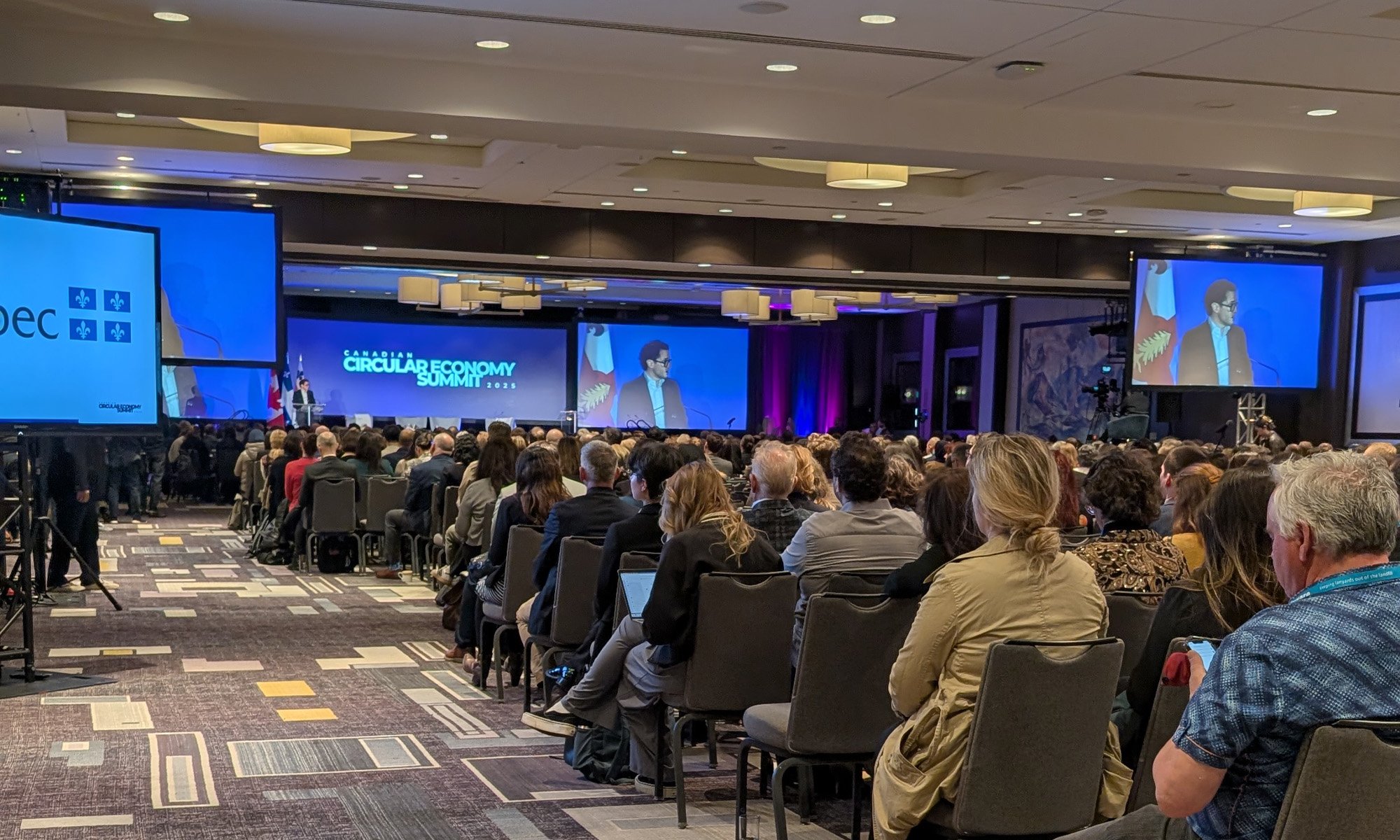
Earlier this month, ASPECT’s Sustainability Lead, Caroline Butchart, attended the Canadian Circular Economy Summit in Montreal—a gathering that brought together innovators, designers, policymakers, and advocates from across industries to reimagine how we use, reuse, and repurpose materials. With a deep passion for circularity and the reuse of existing buildings, Caroline came away from the event feeling energized and inspired. In this blog, she shares her reflections on what made the Summit so refreshing, the insights that stuck with her, and why cross-industry collaboration might just be the key to unlocking a more sustainable built environment…
“If you’ve attended any presentations on implementing building or material reuse strategies, you’ll know there is an exhaustive list of hurdles to overcome, including challenges around deconstruction costs, material sorting, material approvals, and the logistics of supply and demand. The Circular Summit, by contrast, was a surprisingly optimistic and collaborative event, and I came away feeling re-energised and enthusiastic about the challenges rather than hopeless.
For me the real novelty of this Summit was the cross-industry audience. I loved hearing ideas and success stories from different industries, and interestingly the marketing messages that people are adopting to sell circular solutions. Maybe there is demand for reclaimed materials, but if we’re only marketing the materials as scrap/salvage, we’re really doing them a disservice.
- Only 22% of people are motivated by eco-friendly ideals when making decisions. So how do we meaningfully reach the other 78%? (Thanks to OneEarthLiving for the eye-opening workshop!)
- The idea of reframing deconstruction as “urban mining” is powerful. It shifts the mindset that resource harvesting creates so instead of a having a problem to dispose of, we have beautiful, rare materials that are being responsibly harvested.
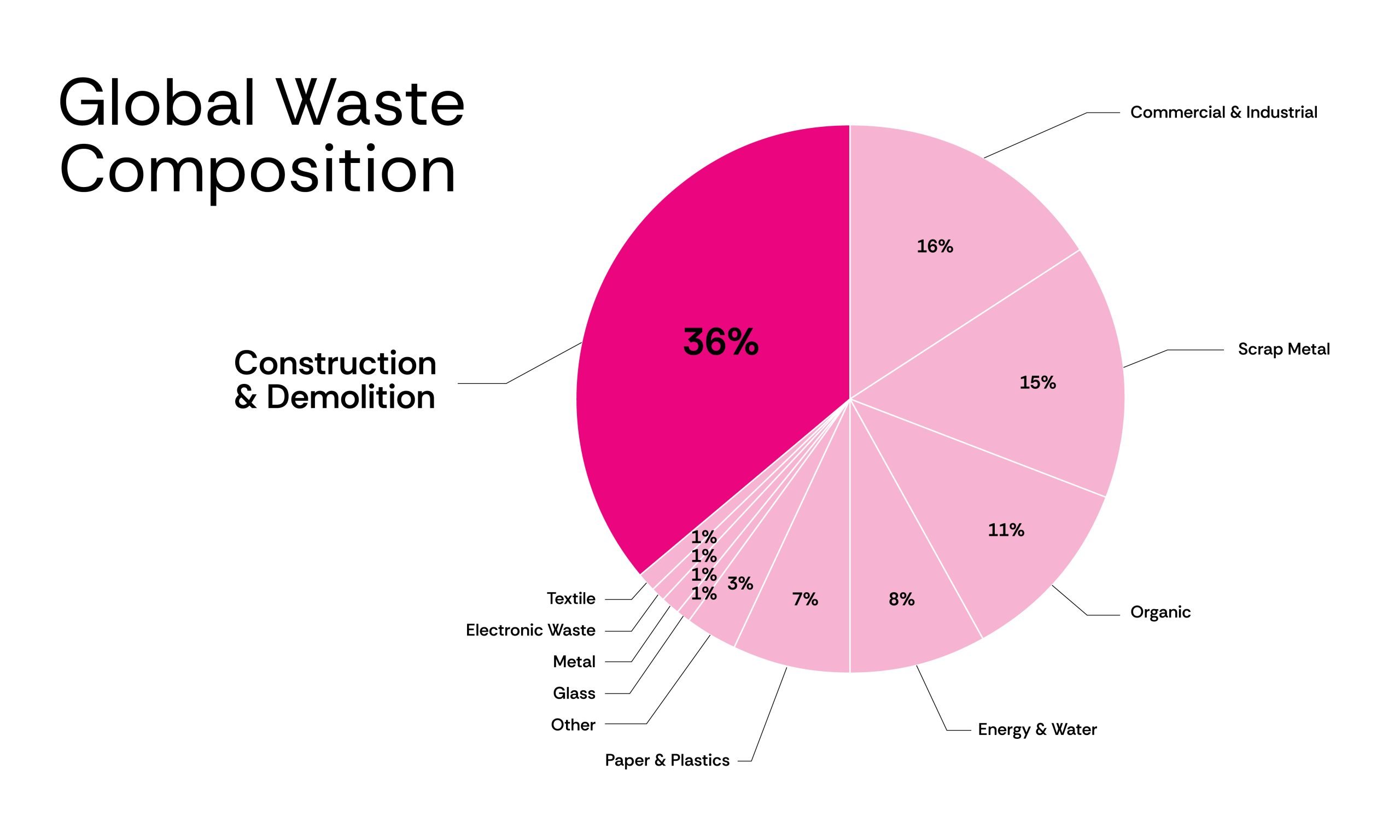
- The construction industry is responsible for 36% of all waste globally, and roughly 12% of global emissions are generated by the construction of buildings. Adopting circular strategies doesn’t choose one sustainability initiative over another; it is a solution to both crises simultaneously
- Circular loops don’t need to be large. The most compelling success stories came from targeting a single material or component, rather than trying to rehome entire assemblies or buildings. Let’s create circular specialists, not circular generalists.
- Nature-based solutions are everywhere. This was a bit of a tangent for me as a structural engineer, but it also provided an interesting message: identify your waste stream—whatever you have an abundance of—and find a creative, use for it that doesn’t involve landfill or waste-to-energy. Aruna Revolution was my favourite here.
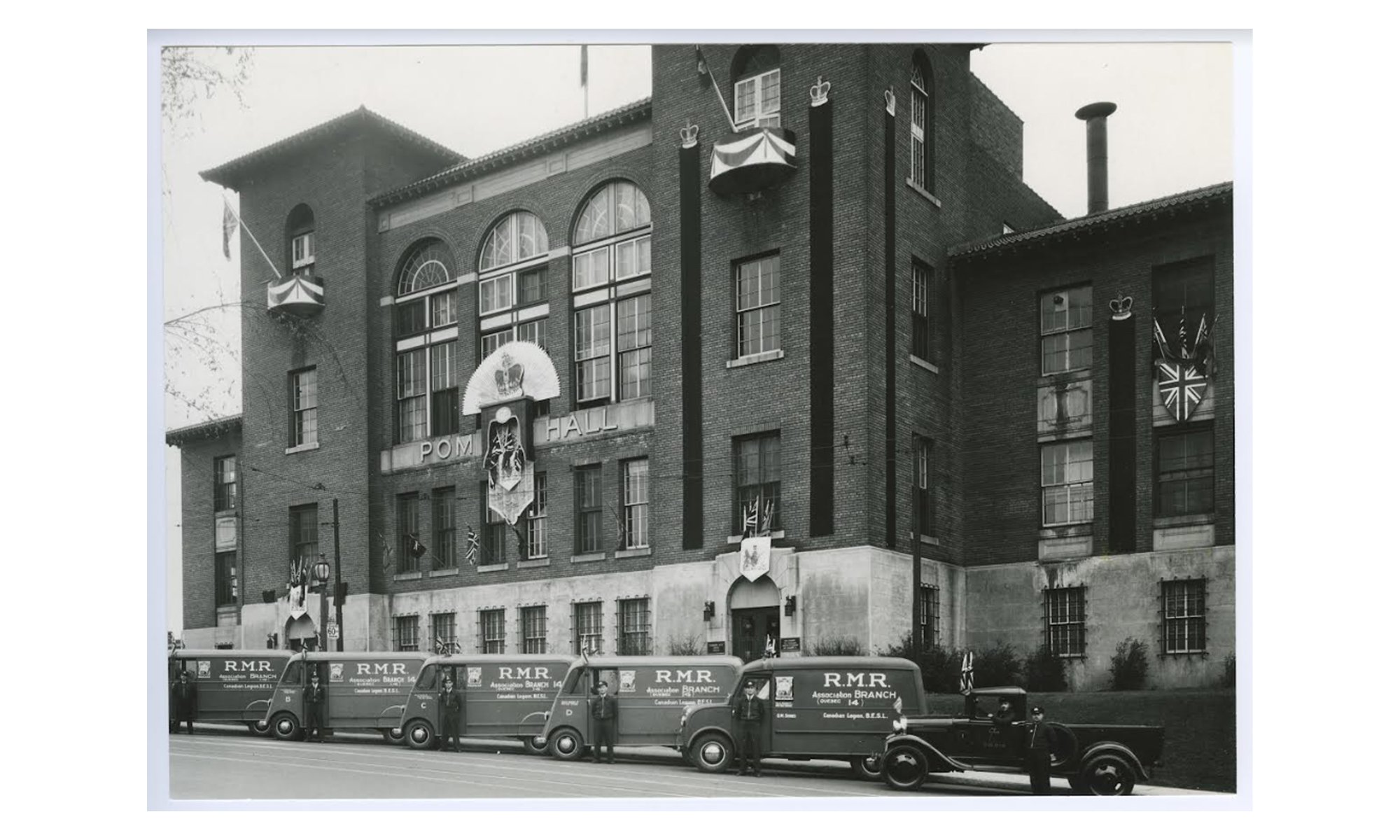

This was also my first visit to Montreal, and by total coincidence, I found myself staying in the former POM Bakery in Westmount. This 1930s structure once housed Canada’s first mechanised bakery, and in 1986 was renovated into a condo building. To solve the problem of large-footprint buildings receiving little natural light at their center, the designers created vast, luxurious lobbies and incredibly spacious apartments laid out with “service functions” on the interior and bedrooms and living rooms along the perimeter. The size difference between these units and those being built today in Vancouver was a little bit staggering.I came across one realtor listing for a unit in the building that begins with: “Imagine living in this piece of history.” And honestly—yes, please. Comfortable, spacious apartments in buildings that already exist? This is in significant contrast to the message we often hear – that building occupancy conversions are too hard, or create apartments that are unlivable. And, in a world where materials are being tariffed and landfills are reaching capacity, we should be doing way more of this.
To me, circular solutions are the epitome of Earth Month. They represent a choice to regenerate, minimize environmental harm, and maximize the value of our extracted resources. From a structural engineer’s perspective, building upgrade and reuse projects are also some of the most fascinating projects to work on. They demand detective work to understand how the existing building is put together, inventive thinking to solve tricky constraints, and close collaboration across the entire design and construction team.
So, here’s to the Earth, and to everyone finding ways to not only minimise harm to the environment, but also finding ways to regenerate and restore the environment we live in.”
Caroline Butchart is a Senior Structural Designer and ASPECT’s Sustainability Lead. She holds a Master’s degree in Architecture and Structural Engineering from the University of Leeds, where she focused on design team integration and sustainability. In addition to her project leadership, Caroline champions internal sustainability initiatives for all ASPECT team members around the world, contributing to our standards of practice, questioning our approaches, and mentoring our growing staff. Her work extends into the not-for-profit sector, where she has developed tools and resources to help drive meaningful reductions in embodied carbon across the industry.
more news

Fresh Press: ASPECT featured on Woodworking Network for Modular Timber Housing System project
ASPECT is part of the team behind the Modular Timber Housing system, led by Perkins&Wil, an initiative dedicated to advancing modular and mass timber housing solutions across Canada. In this piece, Woodworking Network breaks down the research findings and the potential impacts of integrating modular planning, off-site manufacturing, and mass timber construction.

Meet Julian: Engineering from Bern
What happens when you combine timber, battery storage, hydropower, and a healthy dose of engineering problem-solving? A pretty kick a$$ project, as it turns out.

BehindTheBuild: When the Building Won’t Stack
At ASPECT, we spend a lot of time in the space between design intent and real-world constraints, helping our clients figure out how to move a project forward without compromising what matters. It’s also something we look for in the people we bring into the business.